
“If grief can be a doorway to love, then let us all weep for the world we are breaking apart so we can love it back to wholeness again.”
~Robin Wall Kimmerer
I am feeling so much grief today. There isn’t a lexicon that I can use to describe how I feel. The recent school shooting conjured up deep feelings about all the brutality in the world today, yesterday and all the days before! There is a deep, almost overwhelming feeling within me. I don’t know what to do. I walk in nature, meditate, pray, and attempt to find center, but I hurt thinking about all those who hurt much more than I do. How do you survive the loss of a child? How do you wrap your head around the fact that it was another child, a sixteen-year-old, who committed heinous crimes in an elementary school? I do not know.
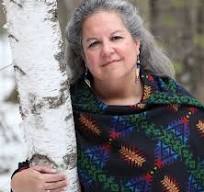
Today, I have to find someone / something that offers positivity, love, and hope. That somebody is Robin Wall Kimmerer. Many know her for her magnificent book, Braiding Sweetgrass. The Service Berry and Gathering Moss (her first book) are other really wonderful reads. Robin is a light in this broken world.
Robin was born on September 13, 1953, in upstate New York, and is a citizen of the Potawatomi Nation. The tribal name in their language is Neshanabe or “the True People.” Her father was a mechanical engineer, and her mother was a chemical engineer. Both parents had a deep love and respect for the natural world and encouraged their daughter to learn about and explore that world. They lived in the little hamlet of Ballston, where Ballston Lake is located.
The lake was part of the Mohawk River during the glacial ice age, and archeologists have unearthed artifacts indicating settlement around the lake as early as 3,500 BC. The native people called the lake Shanendahora. There is a plethora of flora, fauna, and wildlife on the lakeshore. This gave Robin the opportunity to roam endlessly and explore. When she was a young child, she observed her surroundings, pressed leaves, and gathered seeds, keeping them in shoeboxes beneath her bed. “Long before I went to university to learn their scientific names, I regarded plants as my teachers”
It is no wonder then that Robin chose State University of New York College of Environmental Science and Forestry, earning a bachelor’s degree in botany in 1975. After graduation, she worked as a microbiologist with Bausch and Lomb. She moved to Wisconsin to attend the University of Wisconsin-Madison, where she earned a masters in botany in 1979 and her PhD in plant ecology four years later. During her immersion in studies, she developed a fascination with various mosses, which led bryology to make bryology the focus of her career. Bryology is the scientific study of bryophytes – mosses, liverworts, and hornworts. Robin is also a devoted mother. She has two daughters, Linden and Larkin and raised them largely as a single mother while balancing her career as a plant ecologist and professor, an experience she often reflects on in her book Braiding Sweetgrass, plant ecologist, educator, and writer, articulating a vision of environmental stewardship grounded in scientific and Indigenous knowledge.
Robin says that both Western science and Indigenous environmental knowledge have informed her her work. She taught at Transylvania University in Lexington, Kentucky, Centre College in Danville, Kentucky, and in 1993 returned to her alma mater, SUNY-ESF, in upstate New York where she currently teaches. “I feel a deep sense of responsibility to lift up and nurture students—to fan the flames of their becoming who they want to be,” she said. “As a young Indigenous student and scientist, I often felt quite alone, so I want to help create a sense of belonging for my students and colleagues.” Her courses include land and culture, traditional ecological knowledge, ethnobotany, ecology of mosses, disturbance ecology, and general botany. She is the director of the Center for Native Peoples and the Environment and strives to provide programs that allow for better access for indigenous students to study environmental science and for science to benefit from the wisdom of Native philosophy and ultimately reach the common goal of sustainability.
Note from the McArthur Foundation (who awarded her the prestigous McArthur Genius Award) on Braiding Sweetgrass: “The concept of the honorable harvest, or taking only what one needs and using only what one takes, is another Indigenous practice informed by reciprocity. Kimmerer presents the ways a pure market economy leads to resource depletion and environmental degradation. As an alternative to consumerism, she offers an Indigenous mindset that embraces gratitude for the gifts of nature, which feeds and shelters us, and that acknowledges the role that humans play in responsible land stewardship and ecosystem restoration.”
Robin’s grandfather was a student at the Carlisle Indian Industrial School in Carlisle, Pennsylvania, and he inspired her greatly. Carlisle was one of the first and perhaps one of the most cruel Native boarding schools. The school often tore students from their families and forced them to assimilate into mainstream culture and become “civilized.” These schools attempted to erase all Native culture and language. Robin says that “when a language dies, so much more than words are lost.” She took Potawatomi language classes in order to reclaim some of her heritage and learn to speak her language.
Robin Wall Kimmerer continues to be active in many groups and institutions all promoting opportunity, education, continued research, and co-operation in the world of enviro-bio-sciences as her career of service continues. She has received many honors, accolades, and worldwide acclaim. Her current teaching work spans traditional ecological knowledge, moss ecology, outreach to Indigenous communities, and creative writing.
Robin says that Loren Eiseley, Wendell Berry, and Rachel Carson have inspired her work and writing. She reveals a fun little fact that she completes most of her writing in her home office, drafting first versions by hand on lined, yellow legal pads with green or purple ink.
This is just a thumbnail view of a dedicated, brilliant, and caring human who is Robin Wall Kimmerer. If you haven’t read her work, I wholeheartedly recommend it. You will not only read it. I am pretty sure you will “feel” it. I know I did. The natural world can be a balm for troubled souls if we let it.


