
I was sick in body, mind and spirit on Sunday, hence the late post.
It is easy to dislike, fear, or even persecute those who are different from us. They come from different cultures, many ancient and strange to us. They speak an unfamiliar language and certainly don’t look like us. We fear what we don’t understand, and rather than taking the time to learn about those we are fearing, we label them as “different” and not to be trusted, or sometimes the enemy.
I am thinking especially of the Middle East today. Those who live there differ from me in some ways. Iraq, Iran, and Afghanistan are ancient places with deep cultural connections. The art, music, poetry, and architecture found in these places truly awe me. I do not know what life is like there and don’t understand the politics or religion, but I believe that my country has perpetrated substantial damage and injustices there.
I am certainly not a politician, an ambassador, or a strategist. There is so much that I do not know. But I know that war isn’t productive, helpful, or moral. Yet, here we are again, in the Middle East, bombing, murdering and pillaging. Perhaps because the US doesn’t understand too much about them either! Perhaps it is yet another power grab.
Iran used to be called Persia. The place of fairy tales and magic carpets. They are a foundational civilization, ancient and beautiful, known for imperial tolerance, sophisticated art, and a profound and lasting influence on literature and science.
I don’t know a lot about the Middle East and I don’t proclaim that I do. It often mystifies and confuses me, especially the politics, but not the human part. We must not tolerate murdering innocents, destroying sacred places, and abusing women in a country that currently bullies everyone and everything. Our history is full of these atrocities, whether we acknowledge them or not. When will we ever learn? War is not good for children or for anyone else. Oh, wait, war is profitable! That explains a lot.
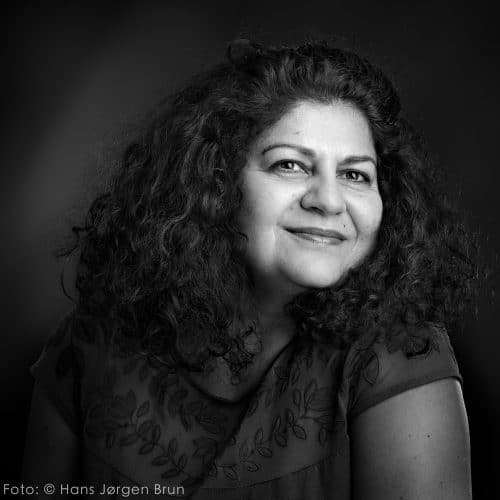
This woman is one who understood her roots and knew how to resist injustice and violence against women.
Yanar Mohammed was born in 1960 in Baghdad, Iraq. Her mother was a schoolteacher and her father was an engineer, and the family was liberal in its beliefs. Her grandfather, her mother’s father, was a Mullah. She loved and respected him and believed he certainly deserved the title, which is an honorific title indicating clergy or a man who has higher education and leads the community. That respect for her grandfather, the Mullah, ended abruptly when she witnessed him marry the fourteen-year-old daughter of his ex-wife. This was when she became an advocate for women’s rights.
Yanar graduated from Baghdad University with a BA in architecture in 1984 and an MA in 1993. While doing postgraduate studies in Canada at the University of Toronto. While in Canada. she was active in the Workers’ Communist Party.
The family moved from Iraq to Canada in 1995, and three years later Yanar founded the Defense of Iraqi Women’s Rights, which later became the Organization for Women’s Freedom in Iraq. She also served as the editor of Al-Mousawat (Equality) newspaper. “Women should not have to compromise and be ruled by the patriarchs of the country. Women should not have to compromise for religious or tribal values of the country. Feminism can save the future generations from these crimes.”
In 2003, she left Canada and returned to her home country during the early stages of the Iraq War. Using her life savings from her work as an architect, she opened shelters for women to protect them from honor killing (murder to preserve or recover “honor” from the family or society, that the victim is perceived as having violated as a result of their actions. Most cases involve femicide), domestic violence, and sex trafficking.The network soon expanded to eleven houses in five cities by 2018. These shelters protected over eight hundred and seventy women. She said the “government was trying to push the ‘archaic’ laws as a means of distracting from its own failings, including ‘huge corruption.’”
With a team of other passionate women, Yanar led ongoing activities against sex trafficking, offered classes teaching women how to confront intolerance, which eventually turned into a Feminist School. She also advocated for equality on radio and television. Yanar interviewed and assisted about thirty incarcerated women. The team saved one woman from a death sentence and others from re-entering sex trafficking. In in an interview, she said, “The US troops need to leave immediately, with no conditions.” She knew all too well how warming devastates communities and accelerates attacks on human rights defenders.”
“Together we have the tools, evidence and resources to implement strategies for inclusive and lasting peace. The full and holistic implementation of Resolution 1325 and international human rights standards provide a comprehensive roadmap for the prevention of armed conflict and the integration of gender equality across all peace and security actions.”
During 2020 Yanar protested regularly at Tahrir Square in Baghdad, which led to threats of arrest. She criticized Iraqi legislation, Shia religious jurisprudence in family law, which gave husbands automatic custody of children as well as a right to a divorce without a wife’s consent, which would lessen restrictions on child marriage. She was very critical of the U.S. invasion of Iraq saying, “US occupation turned the streets of Iraq into a no-women zone…the American occupation that is wiling to do genocide or …political Islam, that will make us live in a completely inhuman and unliberated way of life.”
Yanar saw that the effects US occupation was detrimental to women’s rights, as well as other things. Yanar’s outspokenness and her work on women’s rights was subject to frequent death threats, often causing her to restrict her movements. The Iraqi Islamist group, The Supreme Command for Jihad and Liberation sent her two death threats that were directly related to her work to achieve gender equality in Iraq. For years, Yanar lived under constant threat, as anti-rights and fundamentalist forces sought to suppress her activism for human rights and democracy. Consequently, she returned to Canada.
On May 18, 2007, Yanar was presented with the Eleanor Roosevelt Award for human rights. In 2008, Yanar received the Gruber Foundation Women’s Rights Prize in recognition of her tireless efforts on behalf of women. In 2016, she received the Norway Rafto Prize, and in 2018 Yanar Mohammed was listed as one of BBC’s 100 women.
Headlines on the morning of March 2, 2026, two unidentified gunmen opened fire on Yanar Mohammed as she stood outside her home in northern Baghdad, just a few days after her return from Canada. Officials suspect targeted assassination. She was sixty six years old.
My heart broke again.
Yanar Mohammed: “And the strange thing is that those who started the demonstration that led to the clashes, to the killing and to the bombing around the city, nobody dares to challenge them or to speak any bad word against them. It’s as if I’m living the days of Saddam Hussein all over again, where everybody is scared of a single person, and nobody dares to say anything. It’s a terrible situation.”
“The assassination of Yanar Mohammed fits a chilling pattern of targeted killings and attempted killings of activists that Amnesty International has documented during and in the aftermath of the Tishreen protests since 2019. The persistent failure of the Iraqi authorities to hold perpetrators accountable for past assassinations has entrenched a climate of impunity that continues to place activists at grave and fatal risk. Human rights defenders, including women’s rights defenders in Iraq must be protected — not silenced and killed.” Amnesty International