
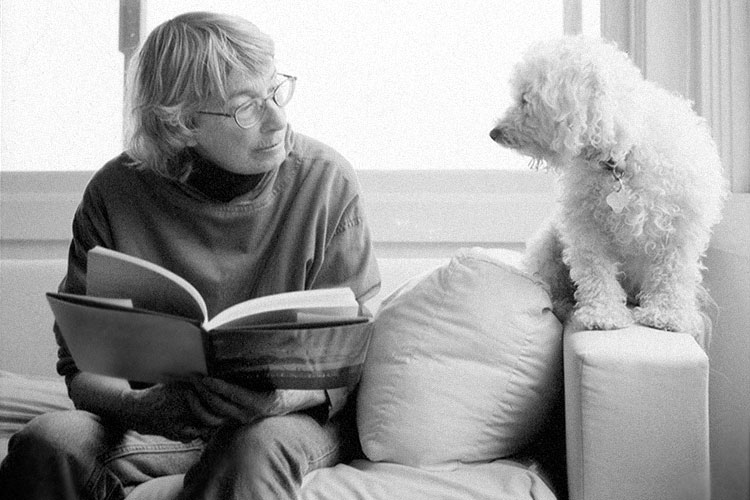
Difficult times call for poetry! A group of amazing women who write, read, and share poetry has reinforced this for me a lot lately. A dear friend, Corina Andronache, who has written the book Archaeology for the Woman’s Soul, leads them. I highly recommend this work and following her. She is a soulful, intuitive, loving, talented woman. Another friend, Maureen K Meshenberg, has written several beautiful books; her latest is Love Yourself Fiercely Through the Beauty and Ache of Life. These women and many more bring such joy and insight into my life. I enjoy sharing them with others who may find them as rewarding as I do.
Poetry has always spoken to me from my earliest exposure to the Children’s Hour by Longfellow, The Gingham Dog and the Calico Cat by Eugene Field, Robert Louis Stevenson’s A Child’s Garden of Verses, Lewis Carroll’s Jabberwocky, and Edward Lear’s The Owl and the Pussy-Cat. As I grew into adulthood, much of Robert Frost’s poetry spoke of many things, but particularly the New England I love and where I grew up. Edna St. Vincent Millay wrote the poem Renascence, which is inscribed on the summit of Mt. Battie in Camden, Maine; my sons and I often camped there in the summer. Poetry was an old and trusted friend as my boys were growing up, often read to them and later, as they could read, we read to each other. When my youngest refused to read in the second grade, Shel Silverstein came to the rescue!
Poetry is a universal language, much like music. It reaches us in the depths of our beings and puts feeling into words that makes us feel understood. Neuroscience reveals that poetry activates the brain regions responsible for immediate emotional response and deep feeling when we are overwhelmed. Mary Oliver is one of those poets who truly speak to me. Though I only discovered her about fifteen years ago, my love of her works has steadily grown. Her words are simple yet profound, exploring the natural world alongside themes of grief, joy, and mortality. She found inspiration for her work in nature and frequently took long solitary walks in the wild. Her poetry is characterized by wonderment at the natural environment, vivid imagery, and unadorned language. I especially enjoy her deep affection for dogs. Her worlds often ground me, validate me, and delight me. I can easily identify with her affection for both dogs and her natural environment.
Mary Jane Oliver was born on September 10, 1935, in Maple Heights, Ohio, a rural suburb of Cleveland. She spent much of her childhood exploring the natural world right outside her door and reading. She disclosed that her family was dysfunctional, which created a very difficult childhood. In a 2011 interview with Maria Shriver, Mary disclosed that her father had sexually abused her and that she experienced recurring nightmares. To escape the dysfunction and pain experienced in her family of origin, she had to create her own world. Her days spent wandering through the woods near her home and writing about it helped her do this. “I very much wished not to be noticed, and to be left alone, and I sort of succeeded.” In the woods she was safe, and she built huts of sticks and grass and wrote poems.
In an interview with the Christian Science Monitor in 1992, she said: “It was pastoral, it was nice, it was an extended family. I don’t know why I felt such an affinity with the natural world, except that it was available to me. That’s the first thing. It was right there. And for whatever reasons, I felt those first important connections, those first experiences being made with the natural world rather than with the social world.”
When Mary was fourteen, she began to express herself through poetry, and at fifteen graduated from Maple Heights High School. That summer she attended the Interlochen Arts Camp in Michigan, where she was in the percussion section of the National High School Orchestra. Mary was able to focus exclusively on music that summer, and it was a deeply formative experience for her. She could connect with other talented artists her age, and from around the world. It helped support her creative spirit.
The following year, Mary visited the home of the Pulitzer Prize-winning poet, Edna St. Vincent Millay, Steepletop in Austerlitz, New York. It was here that she formed a lifelong friendship with the late poet’s sister, Norma. She spent the next few years at the estate helping Norma organize her sister’s work. It was during her time at Steepletop that Mary met photographer Molly Malone Cook, who became her partner of over forty years. In journal excerpts compiled after Molly’s death, Mary wrote: “I took one look [at Cook] and fell, hook and tumble.” The couple lived in Provincetown, Massachusetts, until Molly’s death in 2005. Of Provincetown, she said: “I too fell in love with the town, that marvelous convergence of land and water; Mediterranean light; fishermen who made their living by hard and difficult work from frighteningly small boats; and, both residents and sometime visitors, the many artists and writers.[…] M. and I decided to stay.”
Mary published her first collection of poems, No Voyage and Other Poems, in 1963. She was twenty-eight years old. During the 1980s, she taught at Case Western Reserve University, and her fifth collection of poetry, American Primitive won her the Pulitzer Prize for poetry in 1984. Mary was poet in residence at Sweet Briar College in 1991, then moved to Bennington, Vermont, where she held the Catherine Osgood Foster Chair for Distinguished Teaching at Bennington College until 2001. Mary published many works, won many awards, honorary degrees, and was widely acclaimed as a poet. Her work describes a sense of wonder that nature imparted to her. She expresses it here: “When it’s over” she wrote, “I want to say: all my life / I was a bride married to amazement. I was the bridegroom, taking the world into my arms.”
The foundation for much of Mary Oliver’s work is her memories of the wooded area of Ohio she loved and her home in New England. Her work seems to be influenced by both Thoreau and Whitman. Mary’s work is filled with the imagery of her daily walks, which continued throughout her life. She writes: “[I] go off to my woods, my ponds, my sun-filled harbor, no more than a blue comma on the map of the world but, to me, the emblem of everything.” When things are going well, you know, the walk does not get rapid or get anywhere: I finally just stop and write. That’s a successful walk!” Mary was a prolific writer of both poetry and prose, who routinely published a new book each year, author of over a dozen books. She once told NPR that simplicity was important to her. “Poetry, to be understood, must be clear,” she said. “It mustn’t be fancy. Mary’s fluent imagery weaves together the worlds of humans, animals, and plants.
Mary revealed that her favorite poets were Whitman, Rumi, Haze, Emerson, Shelley, and Keats. She was often compared to Emily Dickinson. They both shared a love of solitude.The Harvard Review describes her work: “Mary Oliver’s poetry is an excellent antidote for the excesses of civilization, for too much flurry and inattention, and the baroque conventions of our social and professional lives. She is a poet of wisdom and generosity whose vision allows us to look intimately at a world not of our making.” The New York Times called Mary, “far and away, this country’s best-selling poet.”
The late poet Mary Oliver is among the most beloved writers of modern times. Amidst the harshness of life, she found redemption in the natural world and in beautiful, precise language. She gave few interviews and said that she preferred her writing speak for itself.”
“Tell me, what is it you plan to do/ with your one wild and precious life?” What did Mary Oliver do with her one wild and precious life? She survived a difficult childhood. She loved a woman for 40 years. She wrote poems that will stand the test of time. Mary Oliver deeply touched our hearts.