
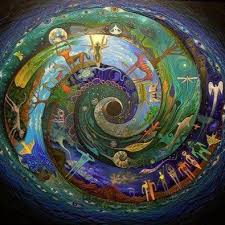
Women have often been referred to as the weaker sex, yet look at all we do! From birthing babies and raising them, women are resilient; they are leaders, have voices in government, and build community. We are the glue that holds lives together. Yet, we are not viewed as strong? Maybe that is because, as Dr. Varun Bansal says, “A woman’s strength is not measured by physical power but by her unwavering spirit, endless compassion, and ability to overcome challenges.” They are warriors who continue to shine despite the storms. The Census Bureau’s small-scale “Census Survey” in 2024 indicated that more than half of American households are headed by a woman.
Women carry generational trauma, but they also carry ancestral strength. We are, whether we realize it or not, influenced by the strength of our female ancestors. Those ancestors carried great but quiet strength, survival skills, and were resilient, all the while nurturing and protecting families. On average, you share 50% of DNA with parents, 25% with grandparents, 12.5% with great-grandparents, 6.25% with 2x great-grandparents, and 3.125% with 3x great-grandparents. It is from the power of a thousand grandmothers that we get our sense of identity. Today, women increasingly find inspiration to move forward, leaving inherited trauma behind and transforming it into conscious resilience.
We must restore the feminine principles. Shamanic and indigenous traditions hold grandmothers as esteemed keepers of ancient wisdom and the sacred feminine, which is so essential for restoring global balance. The grandmothers, who are not just elders, are leading us in a shift away from the patriarchal and misogynistic to a healing, nurturing world that fosters interconnectedness and community. Their goal is turning people back to nature, peace, and spiritual connections, rather than competition, violence, and material growth.
In 1977, during the military dictatorship (1976-1983) in Argentina, the Grandmothers of the Plaza de Mayo formed a human rights organization to protect the rights of children during state-sponsored terrorism. Initially, they were known as Argentine Grandmothers with Disappeared Little Grandchildren, but later adopted the name The Grandmothers of Plaza de Mayo. Their mission was to locate and restore the identities of children who were kidnapped or born in captivity to political prisoners. Children were ripped away from their parents-many of whom were later murdered-and placed in the homes of military officials or families sympathetic to the regime.
Researchers estimate that approximately 8,000 people between sixteen and thirty-five years old disappeared during this period. The grandmothers were assisted by a geneticist from the U.S., Mary-Claire King, who located about 25% of the estimated 500 children kidnapped or born in detention centers.The kidnapped babies were part of a systematic government plan during the “Dirty War” to pass the children for adoption by military families and allies of the regime and avoid raising another generation of subversives.
By 1998, they had documented about seventy-one of the missing children’s identities. The grandmother’s work led to the creation of the Argentine Forensic Anthropology Team and the National Bank of Genetic Data. They found and returned thirty-one missing children to their families of origin. By July 2023, they had reunited 133 grandchildren with their families.
The work of the grandmothers continues to this day, and they now provide legal counseling, assistance with investigations, and psychological support for families. They provide training to teach new volunteers how to facilitate rehabilitation work and learn more about human rights.
In October 2004, an international alliance of indigenous female elders gathered for the first time. Their focus was the environment, internationalism, and human rights. The International Council of Thirteen Indigenous Grandmothers met for the first time at the Dalai Lama’s Menla Retreat Center in Phoenicia, New York. They were an alliance of thirteen women elders from across the globe that was organized to uphold indigenous practices and ceremonies and affirm the right to use plant medicines free of legal restriction.
“The way that we preserve our ceremonies, our culture, is by sharing the knowledge with those who would take the time to listen.” – Grandmother Mona Polacca, Hopi/Havasupai/Tewa
The Grandmothers are committed to supporting all people in reclaiming their relationship with Mother Earth, advocating for a shift toward a more conscious and harmonious connection with nature and all living things. It is an Earth-based community “dedicated to preserving ancient traditions and restoring the sacred feminine wisdom that nurtures balance and harmony. They stand for peace, justice, human rights, environmental protection, food sovereignty, the health and welfare of children and the elderly, for today and generations to come.”
The council meets every six months, visiting each other’s homelands. By doing this, they say that they “build our relations and learn about each other’s cultures.” They wear traditional clothing to their culture and hold a seven-day prayer vigil. In 2007 they met in the Black Hills of South Dakota, bringing together 250 participants from the United States, South America, Europe, Asia, and Oceania.
Today, the grandmothers include:
Ama Bombo, Tamang, Nepal
Flordemayo, Mayan, Highlands of Central America/New Mexico
Maria Alice Campos Freire, Amazonian Rainforest, Brazil.
Rita Long Visitor Holy Dance, Oglala Lakota, Black Hills, S. Dakota, USA
Clara Shinobu Iura, Amazonian Rainforest, Brazil
Rose Bernadette Rebienot Owansango, Omen, Gabon Africa
Margaret Behan Arapaho/Cheyenne, Montana, USA
Others who are supporting the council’s work:
Pauline Tangoira, Maori elder from New Zealand and councillor of the World Future Council
Jeneane Prevatt (“jyoti”) Traveling Ambassador
Madrinha Rita Gregorio Amazon rainforest, Brazil
Constance de Pauliac, France
In 2013, the Fellowship of Reconciliation awarded the Council of Thirteen Indigenous Grandmothers the International Pfeffer Peace Award for their work for peace and justice throughout the world.
I will leave you with a wish for peace in the upcoming week, and this thought:
Efu, Nyaki, a Tanzanian therapist, trainer, and author who is known for her work on empowering women, said: “Half the world are women. The other half are their children.”