
I am angry this morning. Actually, I am furious! I wasn’t going to write anything today because of that fury…but I am boiling over. I have to say something. Every personal wound I believed had healed has become tender again.
The patriarchy wounds us all unrelentingly. How can I not rant about seven men who, over a period of many hours, relentlessly violated a woman and advertised on Snapchat that she was there for free, for all to see…and no one said anything to stop this? Or how can I not rant that the various systems virtually ignored this hideous attack and more or less just saying “Oh, boys will be boys?” I need to rant.
When Jane Doe reported this to the Campus Police, the authorities failed to collect evidence or carry out a proper investigation. No arrests were made. Then the Title IX task force conducted twelve hearings, and nothing further was done. Task forces are places that things go to die, and this sure did. Yes, they suspended two people and closed the frat house. To “mitigate” the situation, the other five had to write essays. The District Attorney’s office of Tompkins County said it did not have enough evidence to charge anyone. The official word from Cornell University is:
“We take sexual violence extremely seriously.”
The victim-blaming kicked in immediately. What did she drink and how much? She took drugs. Why did she go there alone? Why did she stay? Here, they employed victim-blaming to perfection to control. Every girl/woman who reads this story learns the same thing. Report it and you will relive the horror multiple times. People will dissect your life in detail. They will shame and humiliate YOU, and in the end, no one will believe you. The perpetrators are free to do it all over again. Or maybe they will have to write an essay reflecting their remorse! This is not justice. It is as I saw one comment, “the customer service desk for rich boys.”
This isn’t one instance; it is a culture. This is the story of young men who knew no one would stop them, and they didn’t. Society tolerates gender inequality and violence against women, which are deeply intertwined with systemic power imbalances. The National Institute of Health has a lot to say about this, but are we listening? It is alarming what we as a society are accepting across the board as “normal” these days. We, as women, are watching the world burn around us. More and more of our long fought for rights are being eroded. Society has conditioned us all, and we are spiraling, while HIStory repeats itself!
This is not a new scenario. Women have struggled and challenged these societal norms for centuries. One of my favorite advocates for equality is a woman I met years ago in Cambridge when I first heard her speak. I was electrified! Bell Hooks. She was an author and theorist who did a thorough analysis into how patriarchal domination harms both men and women. Her premise is that to dismantle the patriarchy, we must change foundational societal norms through collective and cooperative community work. We can bring about change if we are aware and for together.
She noted everyone participates in perpetuating sexism until making a conscious change of heart and argued that feminists err when they view men solely as privileged wielders of power rather than recognizing how patriarchy also wounds them. Ultimately, the soul of feminism is ending domination for all people, as love cannot coexist with coercion. You can read the complete texts in Understanding Patriarchy and All About Love: New Visions (2000)
Gloria Jean Watkins was born into a working-class African American family in the segregated community of Hopkinsville, Kentucky, on September 25, 1952, one of six children. She struggled with identity as she grew up. Growing up, she described experiencing “a rich magical world of southern black culture that was sometimes paradisiacal and at other times terrifying.” Her education was in racially segregated public schools, but in the 1960s attended an integrated school. She was an avid reader, and some of her favorites were William Wordsworth, Langston Hughes, Gwendolyn Brooks, and Elizabeth Barrett Browning. Her experience in an integrated school influenced her perspective as an educator. Gloria assumed the pseudonym bell hooks to honor not only her great-grandmother, whose name it was, but all female legacies. She spelled it in all lowercase letters in order to focus attention on the message rather than herself. Her writing career began when she was nineteen years old.
Belle graduated from Hopkinsville High School and earned her BA in English from Stanford University in 1973, and her MA in English from the University of Wisconsin-Madison three years later. During this time she wrote her book, Ain’t I a Woman: Black Women and Feminism which she published as bell hooks in 1981. She taught English and ethnic studies at the University of Southern California, African and Afro-American studies at Yale University, Women’s Studies at Oberlin College, and English at the City College of New York. She held the position of professor in residence at Berea College in Kentucky in 2004, and the bell hooks Institute was established there a decade later.
“I am driven to write, compelled by a constant longing to choreograph, to bring words together in patterns and configurations that move the spirit.”
“Whenever domination is present love is lacking,” she wrote in her 2000 book Feminism is for Everybody. “The soul of our politics is the commitment to ending domination,” she added, insisting that the personal, including intimate relations, had to be built on an egalitarian foundation of mutual respect. Male-headed patriarchal families were antithetical to that kind of relationship democracy.
White supremacist capitalist patriarchy as the core of the system that needed changing, she was also an environmentalist, a children’s rights advocate, an ally of LGBTQ and disability rights communities. In an essay in her book Belonging: A Culture of Place, hooks writes about environmentalism: “When we love the Earth, we are able to love ourselves more fully. I believe this. The ancestors taught me it was so.” (From an interview with “Yes” magazine.)
https://www.yesmagazine.org/opinion/2022/01/18/bell-hooks-revolutionary-who-led-with-love
I a Woman: Black Women and Feminism began a long literary career for hooks. She published over 40 books, and she won the National Book Award for Fiction and the Pulitzer Prize for Poetry. In her book, Remembered Rapture: The Writer at Work, hooks writes, “Writing is my passion. It is a way to experience the ecstatic. The root understanding of the word ecstasy—“to stand outside”—comes to me in those moments when I am immersed so deeply in the act of thinking and writing that everything else, even flesh, falls away.” Her most notable works, including 1994’s Teaching to Transgress: Education as the Practice of Freedom and 2000’s All About Love: New Visions, further influenced generations of feminists, educators and artists to approach their work with love and purposefulness.
We can never thank bell hooks enough. She was an educator and public intellectual who hand-wrote the first drafts of all her books. She crafted critical lectures in the fiery spirit of her maternal great-grandmother and (chosen) namesake, Bell Sarah Hooks, born in 1893. She was the product of many Black Southern women whose sharecropping feminism shaped the voice that encircles us. We owe bell hooks for how she laid her body on the academic front line — how she nuanced questions about Black life that set us up for a more imaginable freedom.
https://www.yesmagazine.org/opinion/2022/01/18/bell-hooks-revolutionary-who-led-with-love
Nia Wesley, a video journalist and narrative writer at the Los Angeles Times wrote that passage, in a tribute published on December 15, 2021, following bell hooks’s passing.
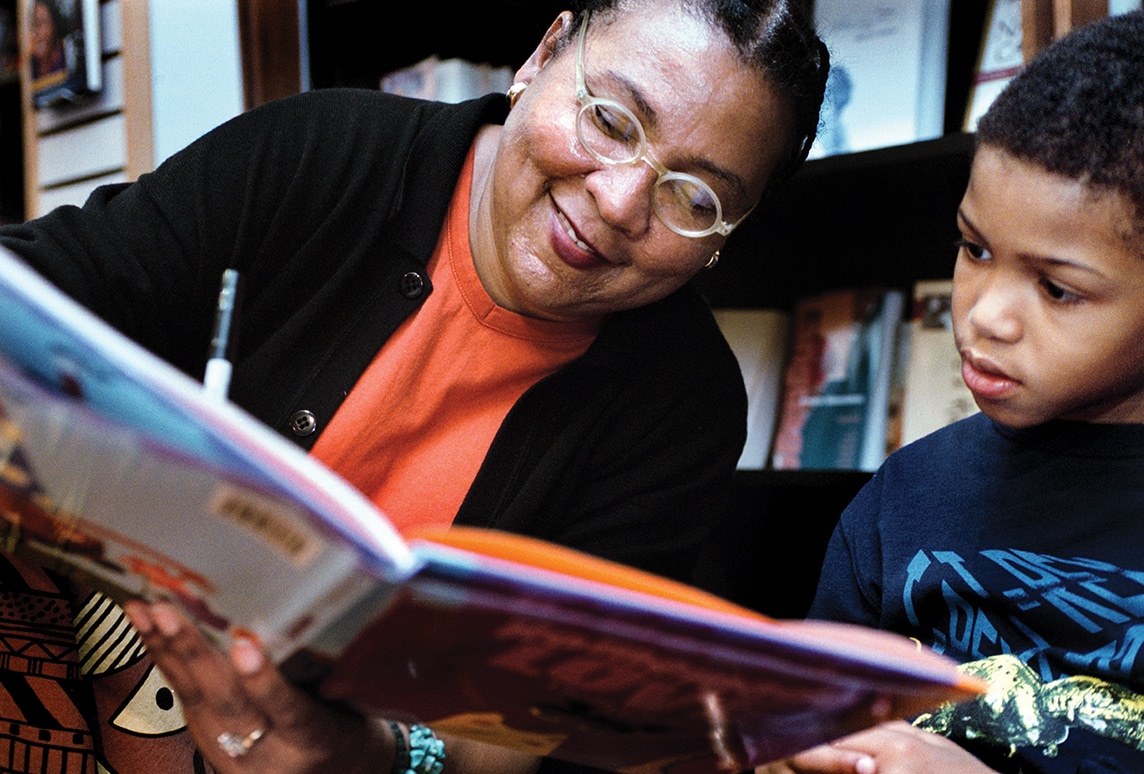
The Image on my blog of bell is a Getty image.