
Equanimity. It’s a word that has been coming up a lot for me lately. The Oxford dictionary defines is as, ”mental calmness, composure, and evenness of temper, especially in a difficult situation.” Because of the state of our country currently, the erosion of democracy, and the rule of law we are all in a “difficult situation.” Mainstream media feed us a continuous stream of atrocities, breaking news, and bombshells. What they are employing is strategic attention management and subliminal conditioning. I think it is really important to understand how this affects us physically, mentally, and spiritually. Beyond these issues, patriarchy and misogyny remain unchecked.
The media’s endless bombardment is not something the human psyche was designed to absorb. It can cause a state of chronic stress, which activates the amygdala, triggering the fight-or-flight response. This response releases excessive cortisol and adrenaline. Our amazing brains recognize this constant stream of negativity, violent imagery, and rapid-fire updates as a constant threat.The results in our daily lives? Dangerously elevated anxiety, reduced attention span, cognitive fatigue, and the potential for actual manifestation in our bodies as illness, insomnia, high blood pressure, and more.
We constantly encounter graphic imagery. Imagery has played a profound role in shaping human consciousness, resulting in the subconscious mind guiding decisions and reactions while the conscious mind remains unaware of the manipulation. Advertising takes full advantage of this concept. This process of the subconscious mind can ultimately alter perception.
Our emotions become numb and desensitized. Have you noticed that things are being “normalized”? This is most likely why. We are experiencing an overload and feel numb. The American Psychological Association tells me that “Excessive screen time and digital media are linked to actual shrinking of our anterior cingulate cortex (emotional regulation) and the prefrontal cortex (decision making).”
The struggle is real. I have felt off balance for a while, quite like I had fallen down a rabbit hole. It wasn’t a healthy place. I needed to take stock and figure things out in order to find balance again. A real reboot for me was the monks and their message as they walked from Texas to Washington, D.C., then in Sri Lanka. Their message was simple but clear. I saw what was triggering my unrest and discomfort. Striving to know everything and flailing in outrage against the world, I became caught in a web of addictive behavior. I have often said we must do what we can and then let go. Remaining productive, despite a quiet, jagged fury consuming me. I don’t think I even realized the extent of my anxiety. I did what I could (letters, calls, petitions, sharing information, etc.) but I never really let go after that.
All of that is pretty disheartening, but there are strategies not only to enrich our lives but also to disentangle ourselves from the constant fight or flight. I am learning to curate content and involve myself in offline activities that are rewarding, restrict screen time early in the morning and before bed. There are tools such as meditation, movement, nature, pets, good books, art, therapy (reaching out for help) community gatherings and conversations, and a myriad of other ways we can engage in positivity and healthy behaviors. Positive stories and news sources are very up-lifting. Yes, they are out there. I came across this one and wanted to share it.
Iceland! For the first time in history, women lead this entire nation at the highest levels. This is not symbolic representation but full, executive leadership. For generations, the power structures positioned leadership as male. This nation has begun removing these strictures and structures. It is a redefinition of leadership and power.
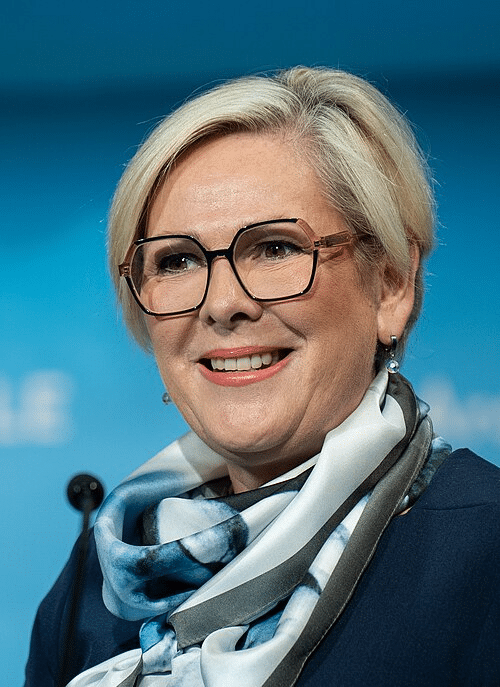
Halla Frostadóttir was born on October 11, 1968, in Reykjavik, Iceland. She graduated from the Commercial College of Iceland in 1986 and moved to the United States where she earned a BA in business administration in 1993 and an MA in Business Administration in 1995.
Halla first ran for president in 2016 and lost that bid, but ran again in 2004 and became the seventh president and second female president. It reflects a system that has gradually encouraged different leadership and not by exception, but by normalization. Kristrún is a businesswoman and the leader of the Social Democratic Alliance, former CEO of the Icelandic Chamber of Commerce, and co-founder of Auður Capital. Her primary goals are sustainability, multilateralism, as she leads confidently with a stubborn optimism. Previously, Halla did public speaking and was the CEO of The B Team, a global nonprofit group whose goal is to transform corporate leadership to serve people and the planet.
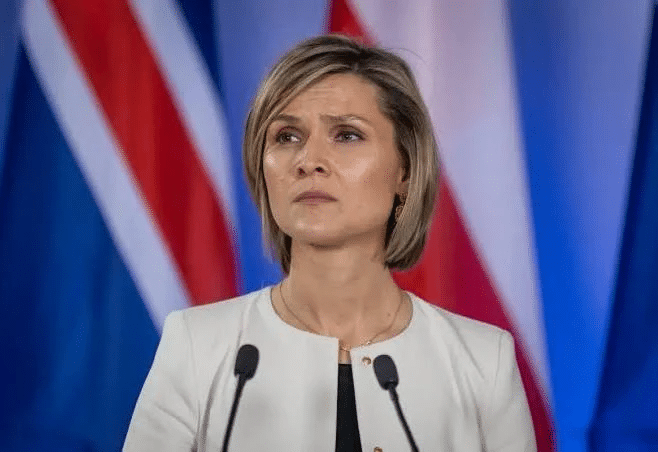
Kristrún Frostadóttir was born on May 12, 1988, in Reykjavik, Iceland. After graduating from Reykjavik Junior College, and earned a BA in economics from the University of Iceland, an MA in international studies from Yale Jackson School of Global Affairs, and a MA in economics from Boston University.
During her studies at Yale, Kristrun focused on economic policy and international finance. She was a summer research associate in Morgan Stanley’s New York office in 2015, joining the firm full-time in London in 2016. Before coming to Yale, Kristrun worked as an economic analyst for Arion Bank in Iceland and as lead economist in a working group on Monetary Reform for the Prime Minister’s office.
At 36, is the youngest prime minister in Iceland’s modern history. She is an economist who worked as a journalist, later at Morgan Stanley, and is the chief Icelandic Chamber of Commerce and Kvika bank. She successfully negotiated a coalition agreement to form a new government with the People’s Party and Reform Party.
Her focus is rebuilding the welfare state, managing inflation and interest rates, stabilizing housing costs, and hopefully joining the European Union. Her primary goals are rebuilding the welfare state, managing interest rates and inflation, stabilizing housing costs, and becoming a member of the European Union.
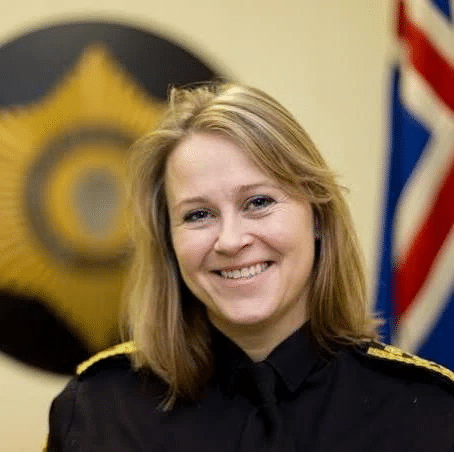
Sigríður Björk Guðjónsdóttirwas born on July 10, 1969, in Reykjavik, is another powerful woman leader in Iceland. She graduated from Reykjavik High School in 1988, earned a law degree at the University of Iceland in 1933, completed study at the Graduate School of Law at the University of Copenhagen, earned a MA in European Law from Lund University in Sweden in 2002, and earned a diploma in Management from the National Police College at the University of Iceland in 2004; Top Senior Officers Course at the European Police College in 2005, diploma in Public Administration from the University of Iceland 2011. Digital Mindset course and Advanced Management Programme, AMP degree, from IESE Business School in New York, 2018-2019. Master’s degree in Public Administration from the University of Iceland, 2020.
Sigríður is one of the key members of the working group on implementing the law on integrating services for the well-being of children, nominated by the Ministry of Justice at the end of 2021. Has served on the board of Bjarkarhlíður since its founding in 2017, as well as being on the board of the Emergency Line since 2017. She is also the chairperson of the Police Council and has been since 2020.
Sigríður is the first female National Commissioner of the Icelandic Police from 2020 to 2025 and previously served as the head of the Reykjavik Police Department. The capital region appointed her senior police leader in March 2026.
Sigridur has received many awards for work well done. Her primary focus is ending human trafficking, domestic violence, women’s rights, and gender equality. She is one of the principal members of the working group on implementing the law on integrating services for the well-being of children.
Together, they represent a shift toward progressive leadership in Iceland and offer inspiration and hope that it can happen across the globe.
By having women in the highest roles, including President, Prime Minister, and Chief of Police, Iceland normalizes female authority, encouraging other nations to break through gender-based, long-held stereotypes.
Through hosting events like the Women Leaders Global Forum, Iceland shares its model, promoting the idea that women’s increased participation is crucial to tackling global issues such as violence and climate change.