
In my opinion there are very few true “Journalists” left in this country. There are a handful, but gone are the days of reporting I could trust. Gone are those journalists who spoke truth not fantasy, who were unbiased and unswayed by anyone. Gone are the true journalists the I trusted for objective reporting; Walter Cronkite, Dan Rather, Tom Brokaw, and Barbara Walters. Gone are the broadcast pioneers like Ben Bradlee, Ed Bradley and Eric Sevareid.
Based on polling in 2025-26 there are some trusted journalists still out there; Lester Holt (NBC), David Muir (ABC), Anderson Cooper (CNN), Gayle King (CBS), and international correspondent Christians Amanpour (CNN/ABC) to name just a few. There are others, both male and female but I will leave it here for now. You know who you listen to and you know how credible they are, or not.
Journalism is being transformed and tech driven. AI has resulted in eliminating staff, the Washington Post just cut one third of their staff, and thousands of other newspapers are shutting their doors. It is reported that approximately 77% of journalists use AI in their work, focusing on creation, editing, and transcription. My own editing program suggests “rephrasing” of my writing in various places. AI. Local “news deserts” are becoming all too common. The industry is also facing deep financial instability which results in the erosion of public trust. AI just informed me that 36% of journalists cite misinformation as the most critical threat to the industry.
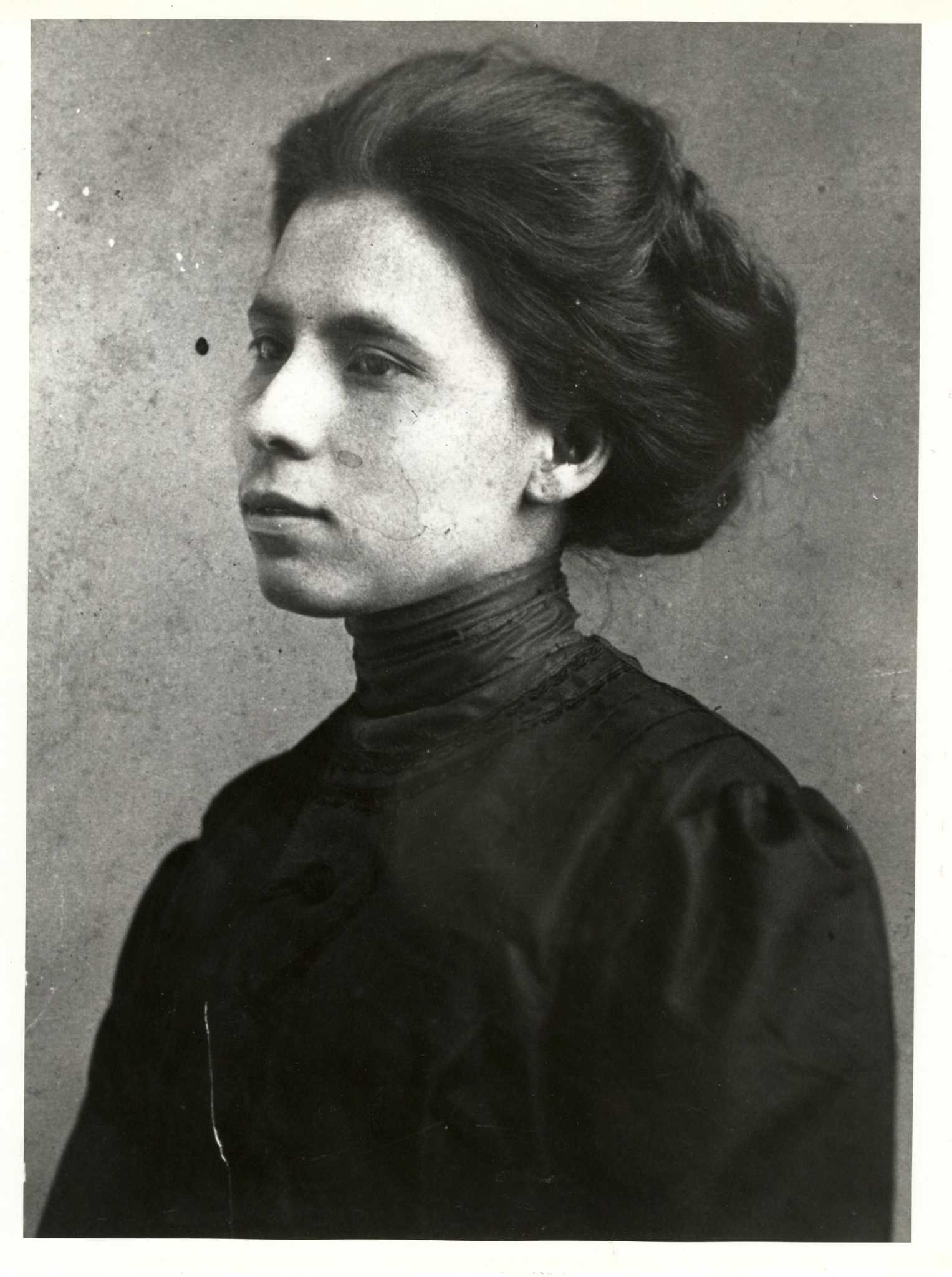
Now that I’v ranted about journalism, I want to focus on an indomitable woman who stood out in the early nineteen hundred as an exemplary journalist. A woman, a Mexican woman, a woman who refused to be cowed. I love this woman! I write about her today in honor of my many friends who are marginalized and even persecuted in our society today because of race, color, creed, gender, skin color, or beliefs. For them, and for all the others I don’t know ,who are out there fighting the good fight. Keep fighting. You will win.
I have written about her before but in this time of dubious journalism, I want to shine a light on her again.
Jovita Idar was born on September 7, 1885, in Laredo, Texas. She was one of eight children. Her family was upper middle class and well respected in their community. They had some privilege that was not awarded to all Mexican Americans, including access to education. All eight Idar children received a good education. Jovita’s father, Nicasio, was the editor of a newspaper and a dedicated civil rights advocate. From a very yearly age Jovita and her siblings were exposed to journalism and political activism.
They were constantly reminded of privilege as opposed to that of many other Mexican families and that they had a responsibility to help the underprivileged. The Idárs were early chroniclers of the growing dangers facing ethnic Mexicans in Texas. Jovita was described the author Robin Radison Person in her book, Marching to a Different Drummer, “Growing up, Jovita was an imaginative, spirited girl; eager student, she won prizes for her poetry and enjoyed reciting before an audience.”
Jovita earned her teaching credentials from the Methodist school, Holding Institute in Laredo in 1903 and began her teaching career in Los Ojuelos. Societal norms of the time indicated that is what she must do. Mexican American women were to be respectable, quiet, useful servants but not outspoken or dangerous. Jovita Idar defied all norms for her entire life. Her first year teaching was eye opening and extremely frustrating. Chicanos all paid taxes to support schooling for their children, yet they were denied entry to those schools. Segregation existed Jovita realized that her efforts made little impact on her students lives because of these poorly equipped and segregated schools. Robin Radison Person wrote, ”There were never enough textbooks for her pupils or enough paper, pens or pencils; if all her students came to class, there were not enough chairs or desks for them.” In addition many of her students, and the broader Mexican-American community in Texas, lived in fear and often faced violence and even lynching. Latinos faced de facto segregation, including exclusion from barbershops, restaurants, and certain neighborhoods.Public facilities, schools, transportation, and housing were segregated.
Jovita left her teaching position in 1910, due to the poor conditions, and chose journalism. She saw what was happening outside the walls of her classroom. She knew Mexican Americans were being lynched, beaten, and disappeared. These events were either minimized or erased completely from English language newspaper. The record was whitewashed.
She joined her brothers at LaCronica, her father’s Spanish language newspaper writing articles and advocating for social justice for Mexican Americans, women’s rights and a year later organized the first Mexican congress with the goal of unifying Mexicans and fighting injustice. Her father, the journalist and printer, was fierce in his criticism of racial violence. He believed that newspapers were not just neutral objects. They were battle grounds and this is a lesson Jovita learned early in her life, not in the classroom, but in the rhythm of the press and the smell of ink pounding truth onto a page of paper. She and her brothers advocated for the rights of women encouraging them to use their voice and vote. In that same year she founded and was the first president of La Liga Feminil Mexicaista (The League of Mexican Women.) The League provided education for Mexican American students. Jovita also championed the rights of women and the importance of women’s independence from men through education. In 1911, when the First Mexican Congress met to address civil rights in Texas, Idár and other women were active participants.
The Mexican Revolution (1910-1920) a major struggle that was driven by social inequality, lack of political freedom and land dispossession. It ultimately led to a constitution al republic. During this time Jovita served as a nurse and took care of many injured during the fighting. She was part of a group that was similar to the Red Cross, La Cruz Blanca.
A few years later (sources cite 1913 or 1914) Jovita returned to Texas and joined the staff of El Progreso newspaper. She wrote scathing articles with great precision about segregation, discrimination in schools, poverty, and about the white mobs and law enforcement who were carrying out lynchings of Mexican Americans. These were dangerous waters to be navigating. Jovita named names, described crimes in detail, refused to let things get swept under the carpet. Society listened and took notice. The State took notice. This was both good and very dangerous. Her writing also protested President Woodrow Wilson’s decision to involve the U. S. Army at the border. She penned a bold editorial arguing against the militarization and unjust treatment of Mexican Americans during the Mexican Revolution, She condemned the presence of U.S. forces there, and challenged the authority of the U.S. government at the border. Jovita advocated tirelessly for the safety and rights of her beloved community.
The Texas Rangers did not like the fact that Jovita spoke out. They came with guns and badges to El Progresso to shut it down. These articles she wrote evoked the ire of the government as they exposed military occupation in Mexico and racial violence in Texas.The Rangers were not symbolic. They were armed forces with a reputation for brutality, especially toward Mexican-Americans. They expected fear and compliance, an easy conquer. Jovita
stood with nothing by steadfast determination, no back up, no weapon, at the front door physically blocking their entrance refusing to let them in. This act of bravery and defiance mattered because she knew that if she backed down irreversible damage would occur. She was defending not just the act of writing stories but the existence of truth. The Rangers retuned the following day when she was not there and ransacked the office, destroyed the presses, and effectively shut down the paper. But what had already been written could not be returned quietly to silence.
Jovita did not give up though.Galvanized by this violence and issues of injustice, she continued to write for other papers. She educated and organized. Jovita was co founded La Liga Ferment Mexicanista, one of the first Mexican American civil rights organizations in the United States. They advocated for labor rights, women’s suffrage, education, and an end to racial violence. Jovita knew women were not incidental in political struggles, they were central. “Women recognize their rights, proudly raise their chins and face the struggle. The times of humiliation have passed, women are no longer men’s servants but their equals, their partners.”
When her father passed away Jovita returned to La Cornice and ran the newspaper. A few years later she married Bartolo Juarez and they moved to San Antonio Texas. History slowly forgot Jovita Idar and her name was relegated to some dusty shelf in an old archive. She was a woman. She was a Mexican American. She was radical without being a spectacle. She didn’t wait for permission or for movements to approve her…she acted! Jovita knew that the written record is very often the first target of oppression. We are seeing some of that now in 2026. Silence the witnesses. Burn the records. Control the narrative and you control the memory while the systems controlling that narrative went unchallenged.
The reason the image of Jovita Idar, standing in that doorway, between state violence and the historical record. She wasn’t pleading, or fearful, but simply insisting that what had been written would not be undone. The truth was already printed. Ink was her shield and presence was her protest.
Perhaps her story is particularly inspiring now because of the war against human rights that is being waged in America. We are plagued daily with threats to democracy and we can learn from those who stood up for democracy and justice in bygone eras. Women, and particularly women of color have been marginalized or ignored in history are now being research by scholars and their critical role in history brought to light.
She was known for saying, “when you educate a woman, you educate a family.”