
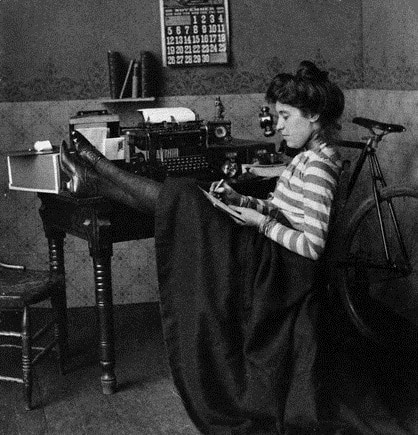
Inspiration! I desperately needed inspiration this week. I am weary; the heat is oppressive. The world is broken and the west is on fire. I was cranky. It’s been a heavy week for many reasons, and I spent an afternoon falling apart! It was cathartic. Then picked up the pieces, dusted them off and decided I needed to find some quiet inspiration to soothe my troubled soul.
Today is the gift of another day, and I am deeply grateful for it. These are some inspiring women who found me in my search for inspiration. They were hiding in the English department archives at Colorado State University and the Women’s History Museum. Some I was familiar with; others were new to me. I hope you enjoy them.
“In the language of poetry, where every word is weighed, nothing is usual or normal. Not a single stone and not a single cloud above it. Not a single day and not a single night after it. And above all, not a single existence, not anyone’s existence in this world.”
Wislawa Szymborska was a Polish essayist and poet tortured and kept I solitary confinement for a short period, for treating a wounded revolutionary. She often wrote from unusual points of view and used understatement to illuminate philosophical themes. Her writing style – ambiguity, precision, paradox, contradiction, and irony earned her the Nobel Prize for Literature in 1996. She was called the “Mozart of Poland,” and credited with the revival of poetry all around the world. Wislawa’s reputation rests on a small body of fewer than 350 poems. When asked why she published so few poems, she replied, “I have a trash can in my home.”
“We want deeper sincerity of motive, a greater courage in speech and earnestness in action.”
Sarojini Naidu was born in India and educated in London and Cambridge. In 1891, she passed her matriculation examination with the highest rank to qualify for university study at twelve years old. Sarojini worked in the suffragist movement and became involved in the Congress party as they struggled for India’s independence. She joined the national movement and was a follower of Mahatma Gandhi. In 1947, she became the Governor of the United Provinces after India achieved its independence. Sarojini’s poetry used color, imagery, and a unique lyrical quality, and because of it Gandhi called her the “Nightingale of India.” Her work includes both children’s poems and others written on more serious themes, including patriotism and tragedy. Her poetry inspired the world.
“I like living. I have sometimes been wildly, despairingly, acutely miserable, racked with sorrow, but through it all, I still know quite certainly that just to be alive is a grand thing.”
Agatha Christie lived in a small town on the southern coast of the UK. She always dreamed of becoming a writer. Six consecutive times, the publishing houses rejected her before she published her first novel. Her life was not always easy, and some mystery and controversy remains but she is the best-selling novelist of all time. Her writing was only outsold by Shakespeare and the Bible!
“In every human Breast, God has implanted a Principle, which we call Love of Freedom; it is impatient of Oppression, and pants for Deliverance.”
Phillis Wheatley was a pioneering poet, the first African American, and only the third American woman to publish a book of poetry. Kidnappers took her from West Africa as a young child and enslaved her in Boston. Phillis was the name of the slave ship she arrived on, and the Wheatley family bought her. Her birth name remains unknown today because enslavement erased it, reflecting the broad dehumanization of Black and Brown people. Mrs. Susannah Wheatley kept her as a domestic servant and companion. Upon arrival in Boston, Phillis did not speak English. It was extremely rare for enslaved people to be educated. During the Revolution, less than 5% of enslaved individuals received an education. However, the Wheatley family felt that it was their Christian moral duty to educate those enslaved so that they could read religious texts, and Phillis received an education in the Wheatley household alongside the Wheatley children. By the age of 12, Phillis was reading Greek and Latin classics in their original languages, as well as difficult passages from the Bible. She also studied astronomy and geography.
Phillis wrote her first published poem at fourteen. Because colonial American printers doubted an enslaved person could write such verse, a panel of Boston leaders examined and verified her work. America had a difficult time accepting and publishing a Black author. A British patron helped publish her historic collection, Poems on Various Subjects, Religious and Moral, in London in 1773. Phillis Wheatley published one book of poetry during her lifetime, and several poems in newspapers and broadsides. Scholars estimate she wrote approximately 145 poems, but many remain lost.
In conclusion…a little extra treat! Have an inspired week.