
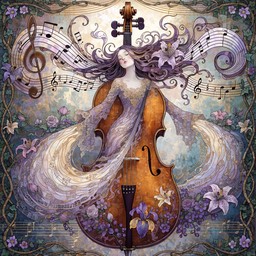
Music has been an integral part of my life forever. My great-grandfather and grandfather not only played the violin, or “fiddle” as they sometimes called it, but they lovingly crafted them. Granddad taught the violin. My father played and sang with the most gorgeous tenor voice. I spent hours babysitting in my teen years and only wanted classical recordings as payment, which I received. Then came the Woodstock era…rock and roll…all music that fueled my soul and filled my heart. Today, music is still one of the great cornerstones of my life. Whether Beethoven, Brahms, Canned Heat, Baez, Norah Jones, Maura McConnell, Mary Black, Enya, the Doobie Brothers, or countless others in many genres, it lives in me. Music isn’t just a passion—it’s foundational to who I am.
Recently I was in a really blue funk and couldn’t seem to shake it. I realized I had not been enjoying any music for several days. Well, that was a real problem! Music would solve it, one playlist at a time. So it did! Music is a powerful tool for emotional healing as it engages the limbic system in the brain, lowers stress hormones, and releases dopamine. It provides a potent outlet for depression, anxiety, and other complex feelings, as well as helping to process deep-seated trauma. It activates memories and pathways in the brain that lead to comfort and safety and reduces heart rate. Even Darwin recognized humans are inherently musical!
There is a wonderful interview with Renee Fleming and Ari Patel where they discuss various aspects of important research around the power of music in healing. Studies/science document its effectiveness in healing stroke recovery, traumatic brain injury, dementia, and cognitive development in children.
Throughout history, there have been pioneering women who not only understood the powerful and deeply restorative power of healing through music but they promoted its use to bring comfort and healing to the suffering, to comfort and help heal those sick or struggling. They also worked to help us understand and document how music affects us and can help shape wellness.
Let’s begin with Florence Nightingale. She recognized in her book, Notes on Nursing, published in the mid-1800s, that music was a powerful therapeutic intervention in her care of patients. She said that music, especially wind instruments, stringed instruments, and the human voice, has a distinct benefit to both physical and mental healing. Florence employed music widely when treating her suffering hospital patients and noted the positive effects.
The renowned American soprano, Renee Fleming, admits that while she loves music, she was not a born performer and had great anxiety around performing. She has become a leading global advocate, partnering with the National Institutes of Health (NIH) to explore and educate the public on ways music engages distinct neural pathways to help pain, depression, and even cognitive decline.
Another skilled musician who has recognized not just the beauty of music but its healing properties is Robin Spielberg. She is a contemporary composer, pianist, actress, and author. She witnessed firsthand the clinical benefits of music when she played her original compositions in the neonatal intensive care unit to help stabilize the vital signs of her premature daughter. The staff in the unit documented that the infant’s oxygen saturation improved, blood pressure improved, and she breathed easier when listening to the music her parents played for her. The AMA has confirmed and documented the effects of music on premature infants.
Dr. Concetta Tomaiano is an internationally renowned pioneer in music therapy and neuroscience research, specifically celebrated for her research in the clinical applications of music and neurologic rehabilitation. She is the executive director and co-founder of the Institute for Music and Neurologic Function. The Institute works at the intersection of music, neuroscience, and care. They work to improve the quality of life through music. Their message is simple but powerful: “Music has power. Everyone can benefit from music – and for individuals living with Alzheimer’s and other neurologic challenges, access to music must be a part of healthcare and daily life.” With her co-founder Oliver Sacks, Dr Tomaiano has spent decades demonstrating and documenting how melody and rhythm help patients who are experiencing severe brain trauma, aphasia, and degenerative conditions.
Keep listening and healing. Find the music that speaks to you. I’d love to hear how music enhances your life and who your favorite artists and genres are. Are you willing to share?
If this subject intrigues you, here are a couple of resources you might enjoy.
https://www.psychiatry.org/news-room/apa-blogs/power-of-music-in-mental-well-being
Renée Fleming and cognitive neuroscientist Dr. Aniruddh Patel participated in a prominent interview titled “Harnessing the Healing Power of Music” released on September 11, 2024, for the APA podcast Speaking of Psychology. They discussed how music affects the brain, body, and health.