
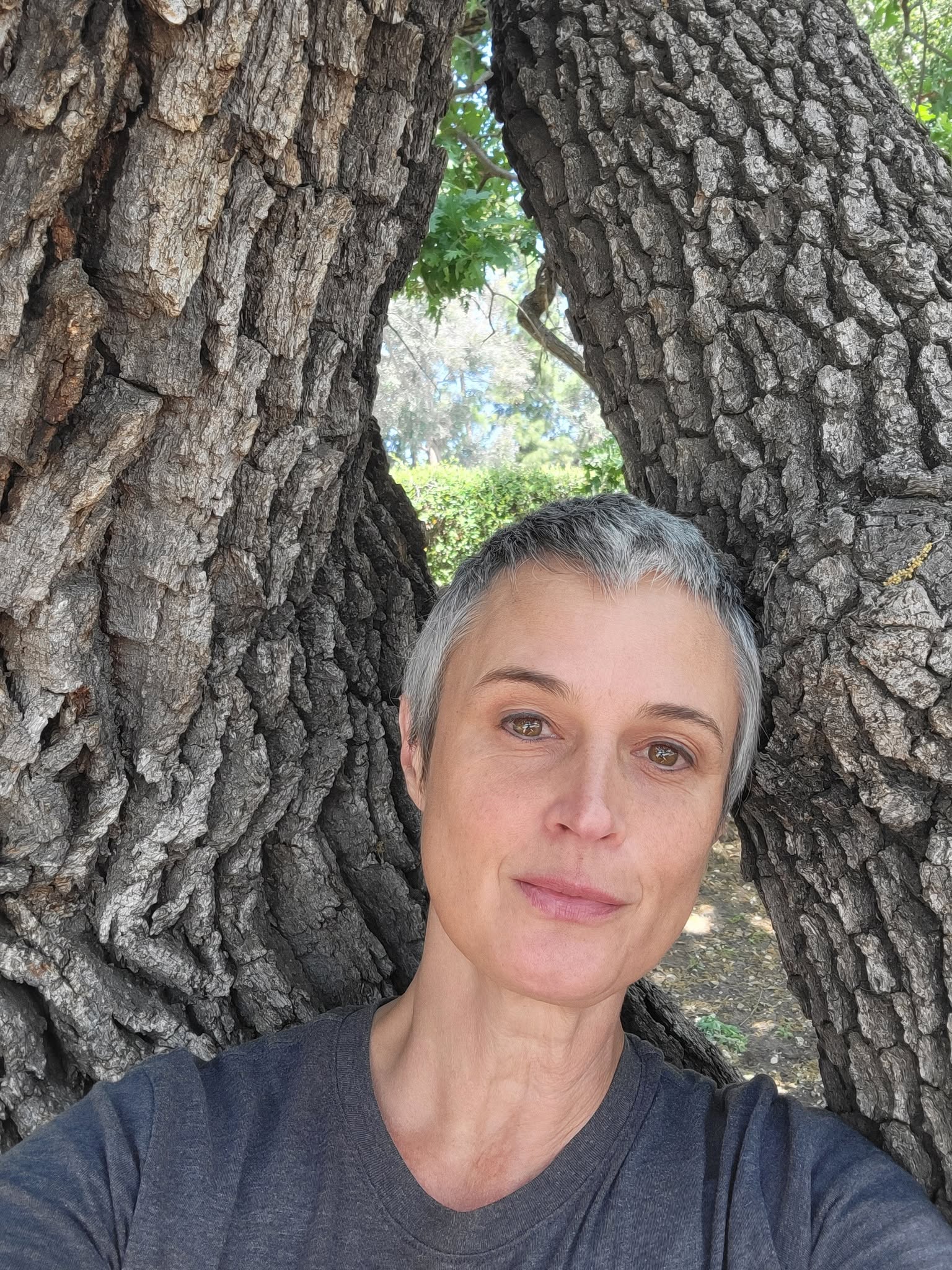
Do you have a favorite tree? Have you ever had a favorite tree? I don’t mean a general species; I mean a particular tree, one that means something special to you. I have a dear friend who is a very talented artist. She lives on many beautiful acres that are generously dotted with old-growth trees. Every year one calls to her, and she builds a relationship with it. She walks out to it, sits with it, touches it, talks to it, hugs it. She says that her special trees inspire her, and she believes, as I do, that all trees are special. But every year she picks one particular tree to spend time with.
I have always had a special tree. When I was small, standing on the second-story porch that overlooked Wallaston Beach, there was a beautiful beach that stood guard over the house. Later, from another porch in the city, there was a catalpa tree that sheltered us. When we moved back to the country, there was a big willow that swayed in the breeze and stood at the corner of our property. Later in my life as a wife and mother, I had another tree that nurtured me for thirty years. She was a magnificent grandmother maple. I slept under her as she was guarding the house, only about five feet away. She showed me a snowy owl one night as it sat patiently in her branches, waiting to catch a mouse. Many birds flocked to sit on her limbs and take sustenance from the feeders she held. Each of those thirty years I marveled at her seasons: the starkness of her winter dress, the early budding in spring and the glorious greenery she wore throughout the summer, then the inevitable display of fall color. She even offered us sap as we tapped her and others to make maple syrup. Out here in the SW, I have had two favorite trees. One ancient pinion that was in my yard, that I lost after a long battle, to beetles. I cried when she came down. I still miss her. She provided glorious shade from the sun in the summer, shelter for the birds, and every once in a while she dropped beautiful piñon nuts for me. My new grandmother tree is in my yard too. A bent, knotted, and gnarly juniper, but she has sheltered me and brought joy too.
They are everywhere, but how often do we really take the time to notice them and, yes, form a relationship with them?
We all know trees support us in many ways: shade, purifying the air we breathe, giving us wood to build with, and just being a general comfort to us humans. I am going to ask you to try a little experiment today, or whenever you have the opportunity. Spend time with your favorite tree if you have one, but if you don’t, find one. What do you notice about the tree and how you are feeling with it?
Throughout history, there have been women who have not only “known” and loved trees but also fought for them. They protected them and they planted them. When she was twenty-three, the American environmental activist Julia Lorraine “Butterfly” Hill lived in the branches of a 200-foot, 1,000-year-old California redwood tree named “Luna.” She climbed to a vantage point at the top on December 10, 1997, and he stayed up there until December 18, 1999. For 738 days, she perched in a little tent on a 6×4 foot platform to protect Luna from the Pacific Lumber Company, which was going to cut her down. Ultimately, Julia saved Luna. I have always marveled at her bravery, her tenacity, and her love of that tree.
Julia moved from town to town during her childhood because her father was a traveling minister. During these traveling years, the family, mother, father, two brothers and Julia — all lived in a 32-foot camper. She loved to explore the rivers and forests around them when they camped. One day as she was walking in the woods, a butterfly landed on her finger and stayed with her for the rest of her hike. From that day on her nickname became “Butterfly.”
When Julia was in middle school, the family put down roots in Jonesboro, Arkansas. In the summer of 1996, she nearly died in a car crash. Julia was the designated driver that evening, as her friends had been drinking. A drunk driver hit the vehicle she was driving from behind, and the steering wheel drove into Julia’s skull. It took her almost a year of intensive therapy before she could walk or speak normally again. She reflected: “As I recovered, I realized that my whole life had been out of balance… I had graduated high school at 16 and had been working nonstop since then, first as a waitress, then as a restaurant manager. I had been obsessed by my career, success, and material things. The crash woke me up to the importance of the moment, and doing whatever I could to make a positive impact on the future. The steering wheel in my head, both figuratively and literally, steered me in a new direction in my life.”
As she healed, she resigned herself to embarking on a spiritual quest that led her to the lifelong cause of environmental activism and opposition to the destruction of the giant redwood forests in Humboldt County, California. Pacific Lumber Company was clear-cutting. On New Year’s Eve, a landslide buried most of that small community in up to 17 feet of mud and debris. The landslide destroyed eight homes. People organized to protect the trees that remained growing on a windswept ridge just above the community of Stafford. The group wanted someone to remain up there in a tree for about a week so that they could halt clear-cutting. Julia said: “Nobody else would volunteer, so they had to pick me.” While organizations eventually supported her, she was not officially affiliated with any group or organization, but felt strongly about what was happening and took on this radical act of civil disobedience.
The tree she chose was named “The Stafford Giant” because it overlooked the community of Stafford. But that night, as Julia scaled that giant, the moon was rising, and the small group renamed that tree “Luna” as the moon was rising. In her own words: An hour and a half after reaching the base of the tree, we got the last of the provisions up. By then it was midnight. Finally, I was able to put on the harness and ascend Luna. It seemed an exhausting eternity before I reached the top. When I finally got there, I untangled myself from the harness and looked around for a place to collapse.”
During her time living on Luna, Julia endured freezing rains, 40 mph winds from El Niño, harassment by a helicopter buzzing overhead, a ten-day siege by company security guards, which was an attempt at intimidation by angry loggers.
In November 2000, vandals cut into Luna with a chainsaw, resulting in a 32 inch deep gash that measured 19 feet around the base. It was a bit less than half the circumference of the tree. Teams rushed to treat her with herbal remedies, and a civil engineer, Steve Salzman, designed and built a system that would brace her and help her withstand extreme windstorms that sometimes brought 60 to 100 mile per hour winds. In 2007 Luna was still doing well and showed fresh growth each year. She is still standing, and a permanent conservation easement and a three-acre buffer zone protect her. The land trust Sanctuary Forest is her legal guardian and monitors her health regularly.
Julia’s activism didn’t end in the redwood forests of California, though. Outside the offices of Occidental Petroleum in Quito, Ecuador, police arrested Julia on July 16, 2002. They jailed her for protesting a proposed oil pipeline that would penetrate a virgin Andean cloud forest, home to rare birds. President Gustavo Noba of Ecuador appeared happy with the arrest and jailing, stating, “The little gringos have been arrested, including the old cockatoo who climbs trees.” Julia was later deported from Ecuador.
Back in the United States in 2003, Julia advocated for tax redirection. She resisted paying approximately $150,000 in federal taxes, instead donating the money to after-school programs, arts and culture programs, community gardens, and programs for Native Americans that were alternatives to incarceration, as well as environmental protection programs. She addresses the subject this way: “I actually take the money that the IRS says goes to them and I give it to the places where our taxes should be going. And in my letter to the IRS I said: ‘I’m not refusing to pay my taxes. I’m actually paying them, but I’m paying them where they belong because you refuse to do so.’”
In 2006, Julia protested the sale of the South Central Community Garden in South Los Angeles. It was a 14-acre urban farm, one of the largest in the United States. It was purchased by developers who began bulldozing despite vehement protests and acts of civil disobedience. The Academy Award-nominated film The Garden and the PBS documentary South Central Farm: Oasis in a Concrete Desert about both expose’s about the South Central Community Garden.
In June of this year, a group of people occupied trees at the John Muir High School in protest of the removal of more than 100 trees. Paloma Muniz-Ochoa, a 17-year-old student, voiced her dissent through an act of civil disobedience. She spent eight hours sitting in an oak tree that was marked for removal. She spoke at a City Council meeting, saying: “I don’t think it’s fair that these trees are being taken down. Being in the oak tree, I connected with it and it’s clear that it’s holding a lot of life and that it means alot to the environment and to the animals and plants living in it.” Paloma tagged Julia in a social media post. Julia traveled to Pasadena to support the tree sitters! Her work continues.
People have written music about Julia “Butterfly” Hill. The Red Hot Chili Peppers in their song “Can’t Stop” released in 2004 referenced J. Butterfly in the treetop.
Neil Young referred to Julia in his 2003 song, Greendale. The musical, Redwood, premiered in 2024 at the La Jolla Playhouse in California and opened on Broadway in February 2025, and Julia inspired it.
People have written books about this amazing woman. Jessica Hurley and the author co-authored One Makes the Difference: Inspiring Actions that Change Our World in 2002. Also in 2002, Julia Butterfly Hill: Saving Redwoods.
She is an extraordinary example of what one woman can do. Even if we don’t perch on top of a giant tree, we can still advocate for environmental change. We can also find our tree and love it!