
It happened to me suddenly. One day, about three years ago, I woke up and realized I was a crone. I never thought about it much before that day in early spring. I was old. When did that happen? I resented it and resisted it for a while. Then, slowly, I began not only to accept it but to celebrate it. I realized things had changed. I can no longer do some things I used to do, and it takes longer to do others. But I am still here.
But fellow crones, we are still alive, a gift not granted to everyone. I am still vital although somewhat changed, and my “beauty” is no longer measured by youth. As crones, we have loved, lost, learned, stumbled, and are rising. We understand that we are wise. Our lives may be written on our faces, but we have strength, magic, wisdom, and stories. Oh! We have stories! Don’t forget we also have generations carried within us. We are the matriarchs holding the sacred knowledge of womanhood. We are part of the circle of life of women: maiden, mother, crone. While society affirms young women as sex objects, shames them as sluts, then celebrates mothers on Mother’s Day while providing few legal and economic protections for mothers, while ignoring older women. As a crone, I have stopped fearing what that means and, albeit reluctantly at first, begun to celebrate it.
Throughout history, crones have been ostracized, vilified, feared, marked for death, and burned at the stake because those in power (men) feared the power, esteem, and influence these wise women held. Folklore has portrayed her as the ugly witch or “hag” to be avoided at all costs. Think Baba Yaga! This archetype goes back to ancient civilizations.
The lesson the crone teaches is the reclamation of personal sovereignty. Society seeks to marginalize the wise women’s influence in any generation because it might interfere with the patriarchy – heaven forbid! – and also because our society has viewed women for generations as valuable only for their youth, beauty, and ability to bear children; they become useless and invisible once youth fades, and they wear their age as a badge of honor.
Our culture teaches women from a young age that youth and beauty matter. Our brains grab these repeated messages we receive repeatedly. When youth leaves, as it inevitably does, our brains equate this biological process with loss. But we have gained oh, so very much in becoming who we are now, a crone. We have the wisdom to know who we are and the knowledge to understand what we want. In other words, we are rockin’ it!
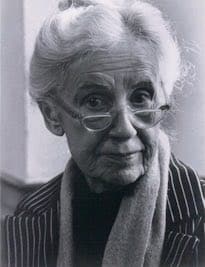
There are actual groups of “grannies” who are making a difference; the Raging Grannies, who dress in outrageous costumes and sing for safe gun storage and legislative reform. The Climate Grannies, an international group of older women who train in nonviolent direct action, demanding clean air, water, and rapid climate action. The Golden Grannies, who are “out of our rockers and into the streets,” are an energetic hop-hop dance troupe out of Arizona. We are out there doing things, and someone who has always caught my attention is Maggie Kuhn. I have written about her before, but she is someone who deserves to be shared again.
At age 65, when many people prepare for quiet years, Maggie Kuhn embarked on the greatest adventure and most important work of her life, she established a group of older citizens, and they called themselves The Consultation of Older and Younger Adults for Social Change. In 1970, a television journalist dubbed her group the Gray Panthers because of their fierce, radical advocacy style, and it stuck. Maggie began this movement because she was forced into mandatory retirement from her job solely because of her age.
Margaret Eliza Kuhn was born on August 3rd 1905, in Buffalo, New York. Her father managed the office of the Bradstreet Company (later to become Dun and Bradstreet) in Memphis, Tennessee. Maggie spent her childhood in the East because her mother didn’t want her children raised in the segregated South. Maggie went to Flora Stone Mather College of Case Western Reserve University, majoring in English.
Maggie worked for the YWCA in both Cleveland, Ohio, and Philadelphia, Pennsylvania, then in New York for the National Board of the YWCA all during the years between 1930 and 1947. During this time, she became a forceful advocate for social justice and activism, educating women about unionizing and other social issues affecting women’s lives. Maggie caused much controversy as she started a human sexuality class in which she discussed birth control, the mechanics of sex, sexual pleasure, pregnancy, and the challenges of remaining single in a culture where marriage was the norm.
Later, during WWII, Maggie was the program director for the YWCA-USO, which was controversial for her as a career choice because she vehemently opposed the war. However, she continued her advocacy work, taking a progressive stance on issues such as desegregation, urban housing, McCarthyism, the Cold War, and nuclear arms.
From 1947 to 1970 Maggie worked in various capacities, but predominantly teaching, for the Presbyterian Church. She helped shift focus from rigid gospel to that of a more social gospel framework that included social justice. Her focal point was the social dimension and social justice, and she declared none of her students would pass her class until they went out into their community and found poverty. She wouldn’t allow them to remain complacent.
Maggie was cruising along in a job she loved and did extremely well with the Presbyterian Church until she turned sixty-five, when she was forced into mandatory retirement. Outraged, she and other “seniors” formed a group called The Consultation of Older and Younger Adults for Social Change. Rev. Ruben Gums, a TV producer in New York City suggested the name “Gray Panthers”, after hearing Maggie advocate for militancy among older adults. The Gray Panthers quickly adopted the name, and it attracted much media attention and public support.
During an appearance on The Tonight Show starring Johnny Carson, the opening monologue mistakenly introduced a seventy-two-year-old white woman with gray hair in a bun and wearing a Mao jacket as Maggie Kuhn of the Black Panthers. When he realized his mistake, he corrected himself, saying she established the Gray Panthers, not the Black Panthers, and she was a champion for old people’s power. Maggie assured him it was just fine to mix up the names because both organizations were collaborating on “some very good things!”
Maggie continued to discuss difficult topics such as gerontologists perpetuating the illusion that older people were problems in society and called into question the representation of old people in popular media. More controversy came as she openly discussed the sexuality of older people, criticized housing for older adults, calling them “glorified playpens.” She addressed Social Security, stating that politicians had created an intergeneration was over federal funds in order to divert public awareness from overspending in the military and extravagant tax breaks for the rich. Sounds familiar?
During her later years in activism, Maggie lived in her own home in Philadelphia, Pennsylvania, sharing a home with younger adults. They received a break in rent in exchange for help with various chores and companionship. She called them her community and “family of choice.” She founded the Shared Housing Resource Center and worked with others to develop the Festival of the Ages in Princeton in 1981. Ten years later, Maggie wrote her autobiography, No Stone Unturned. In 1995, they inducted her into the National Women’s Hall of Fame.
Maggie was truly an inspiration, and her advice to actives interested in creating social change shows the strength of her convictions: “Leave safety behind. Put your body on the line. Stand before the people you fear and speak your mind – even if your voice shakes. When you least expect it, someone may actually listen to what you have to say. Well-aimed slingshots can topple giants. And do your homework.”
She and the Panthers have been directly instrumental in enacting significant national reforms, including nursing home reform, ending forced retirement provisions, and combatting fraud against the elderly in health care. Maggie Kuhn believed growing older should never mean becoming invisible.