
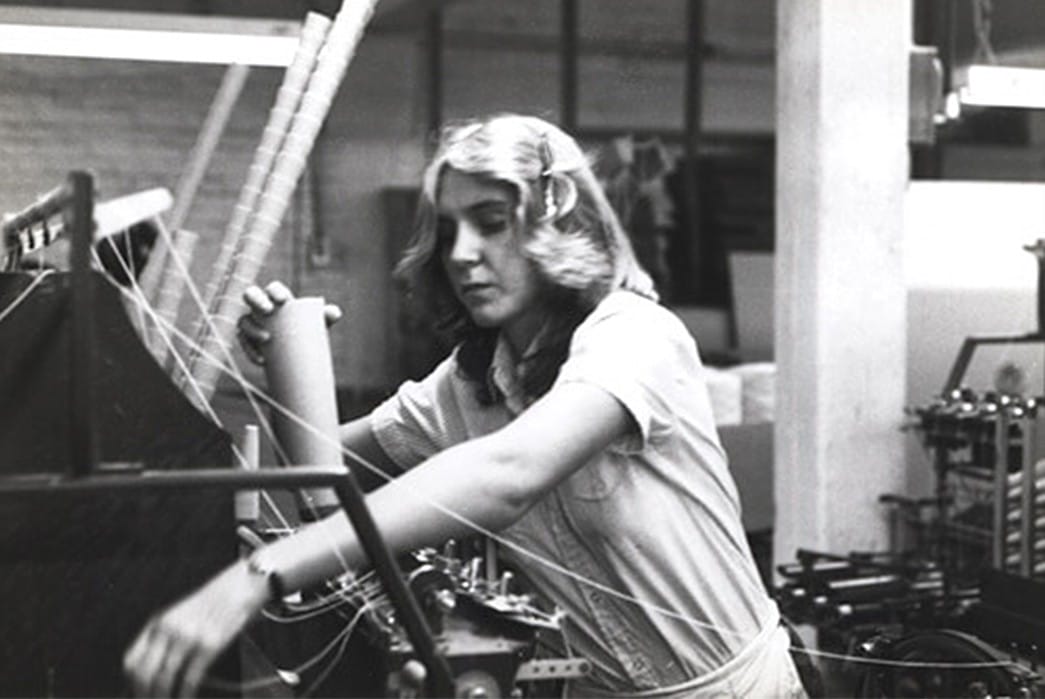
Labor Day signals the end of summer, and for some of us, it is a paid holiday. But it has a much deeper meaning that we may easily overlook. It’s been called America’s forgotten holiday. It was first celebrated on September 5th, 1882, when approximately 10,000 workers took unpaid leave to march in a huge parade in New York City. Not a widely known fact. Although traditional history credits Peter McGuire,Co-founder of the American Federation of Labor, or Matthew Maguire, secretary of the Central Labor Union in New York, with founding this holiday, women actually formed the backbone of the early Labor Day movement.
Below is a brief timeline provided by History.com.
1834 First turnout of “mill girls” in Lowell, Massachusetts, to protest wage cuts
1843 Lowell Female Labor Reform Association begins public petitioning for a 10-hour day
1871 After her dress shop is destroyed in the Great Chicago Fire, Mary Harris “Mother” Jones begins working as a labor organizer
1903 Women’s Trade Union League formed at the AFL convention
1909 “Uprising of the 20,000” female shirtwaist makers in New York strike against sweatshop conditions
1911 Triangle Shirtwaist Factory fire in New York kills nearly 150 workers
1912 Bread and Roses strike, begun by immigrant women in Lawrence, Massachusetts, ended with 23,000 men, women, and children on strike and with as many as 20,000 on the picket line
1933 Frances Perkins becomes the U.S. Secretary of Labor, the first woman to be appointed to the U.S. Cabinet
1963 Equal Pay Act bans wage discrimination based on gender
1974 Coalition of Labor Union Women founded
2009 President Barack Obama signs the Lilly Ledbetter Fair Pay Act, which restored the rights of working women to sue over pay discrimination
Issues for women in the workforce still remain, though. Childcare costs and access are a large barrier for mothers, as well as biased inequities in pay and promotions. Women still lack adequate paid family leave, and women of color experience the most severe disparities. We have gained some ground, but there is still work to be done!
One woman who was a driving force behind change for women in the workforce was Crystal Lee Sutton. She was born on December 31st 1940, in Roanoke Rapids, North Carolina. Three generations of her family worked in the textile industry. Young Crystal joined in the family tradition, calling herself a “lint head.” It wasn’t an insult; it was a fact.
Crystal was just seventeen when she joined the J.P. Stevens factory on the four pm to midnight shift. Her job was reloading fast-moving looms with fresh shuttles of yarn. The dust was choking all the time, and the noise was deafening. By nineteen she was a mother and gave birth to her first child at twenty. At twenty-one, she was a widow. She waitressed, sewed and took whatever work that paid her to keep the family together. Somehow she always ended up back at the mills, as that was the work she knew best. In 1972 Crystal returned to J.P. Stevens, where she worked six days a week for $2.65 an hour, folding towels. She had no benefits and was a “lint head” again. Injuries were frequent and rarely documented or compensated.
This is when Crystal became an activist. In 1973, she saw a union poster in a company mill owned by J.P. Stevens. The Company owned every house in her neighborhood. She went to her first union meeting and consequently began to think about the paltry wages, the bone-tiring work, and the stingy benefits that she and her parents had suffered. She wanted something better for her children.” Her family had lived this way for three generations, but now Crystal was seeing things through a different lens. She wanted change, and unions were the way to bring that change about.
The Textile Workers Union of America sent an organizer, Eli Zivkovich, to organize at her plant. He worked with Crystal trying to get workers at that plant to join the union, talking to workers, explaining their rights, and building support one conversation at a time. He said, “in {his} 20 years as an organizer, he had never known anyone who matched Sutton’s zeal.”
Crystal wore a union button while working on the floor. Supervisors noticed immediately and harassed her. She kept organizing. Supervisors began calling her to the front office for minor infractions: talking too much, standing in the bathroom too long. Union supporters were intimidated; organizers were constantly harassed. Crystal said higher-ups and even her own coworkers treated her as if she had leprosy.
The National Labor Relations Board (NLRB) found J.P. Stevens guilty of twenty-one separate labor law violations and ordered the company to pay $1.3 million in back wages to hundreds of illegally terminated employees. The company paid, but continued with its illegal practices.
Crystal continued to organize despite many threats, and security escorted her from the floor one day, instructing her to collect her things. She was being let go. Fired. On her way out, she grabbed a piece of pasteboard and a marker and wrote in large letters UNION. She climbed up onto her workstation and held it high above her head, turning slowly in a circle so everyone on that floor could see it. Things began to change. Silence ensued as the workers shut off their machines one by one. Soon all the machines were shut down. Workers began raising two fingers in the victory sign. That entire factory stopped working because one woman took a stand and would not back down.
The police arrived and dragged her none too gently down from the table. She resists. They arrested her and removed her from the building. But every single worker on that floor saw what she did. On August 28th, 1974, all 3,133 workers at that Roanoke Rapids plant voted to join the Amalgamated Clothing and Textile Workers Union (ACTWU).
In 1977, a federal court ruled that Sutton had been illegally fired. J.P. Stevens was ordered to reinstate her and pay $13,000 in back wages. Sutton went back for two days. Then she quit. She had bigger work to do. Crystal went on a national speaking tour, organizing on behalf of workers, and eventually a paid organizer hired her. She later returned to school, studying nursing at Alamance Community College, and donated her organizing papers — posters, meeting notes, photographs, letters — to the college’s archives. She wanted students to learn from them and wanted future historians to find them.
If any of this sounds familiar, it is because in 1979, director Martin Ritt released “Norma Rae,” with Sally Field playing the lead. Crystal Lee Sutton was the inspiration for this film. In 1975, Henry Leifermann, a New York Times reporter, published “Crystal Lee: A Woman of Inheritance,” which documented her life of activism in full. The film premiered at Cannes, where Field won Best Actress. Field then won the Academy Award for Best Actress and the Golden Globe. The film grossed $12.5 million. Crystal Lee Sutton received none of it. The book had paid her nothing. She had to sue 20th Century Fox. The eventual settlement was $52,000, half of which went to taxes. Twenty-six thousand dollars. That was her share of a multimillion-dollar film built entirely on her life.
Crystal Sutton was the 13th recipient of the Pacem in Terris Peace and Freedom Award in 1980. Her legacy lives on.