
Do you ever come across something that just softens your edges immediately? Something that just melts you, leaving you with a peaceful, easy feeling? Every once in a while it happens to me suddenly and out of nowhere. I am left wondering what just happened? Written or spoken words or music could create this phenomenon.The following piece is by an inspiring author that I have known online for years, and it got me!
“Let today hold you in delicate embrace, Let the movement of your steps be soft, let love breathe through you tenderly and magnificently. Open your weary eyes dear one. Find your awe in the moments of sweetness in the little things that flow gratitude through your soul and heart, let love fill the seconds of your day. Don’t let one day just bleed into the next, life calls us to find compassion to ourselves, to each other, to the world. Through the fray of life that tries to take it all away, say to yourself with coffee or tea in hand, today is going to be a good day.” Maureen Kwiat Meshenberg
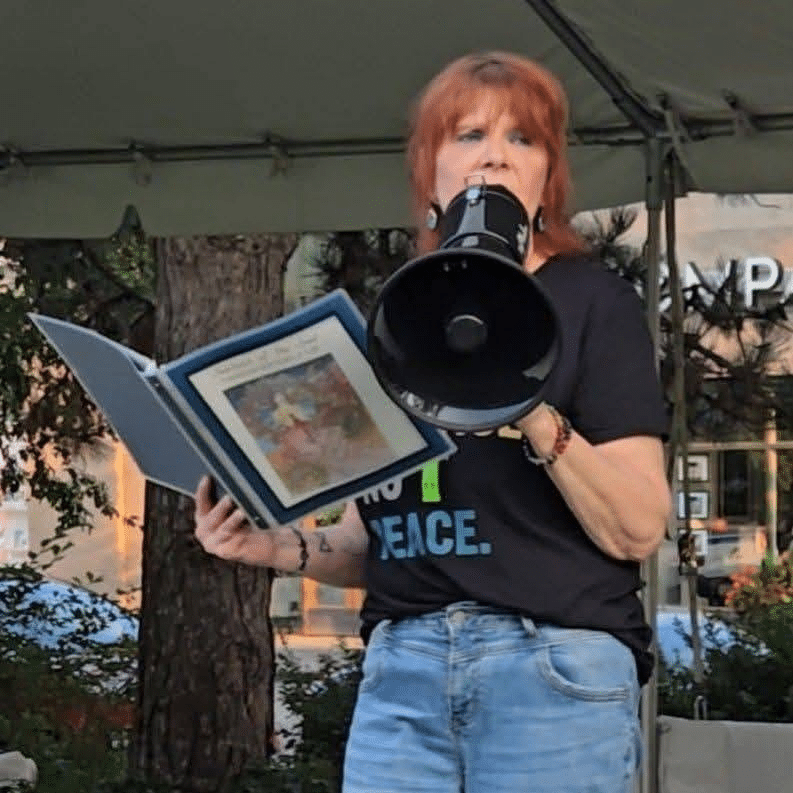
You can visit her and learn more about this prolific author here:
https://heartscalling.weebly.com
It got me thinking, what a gift today is. How being in the now with grace and gentleness is so important. The world spins on its axis with the good, the bad, and the ugly. It is now and always has been and probably always will be as long as humankind exists. What we focus on is what we create in our lives. That is why people like Maureen and other women inspire me and remind me that the NOW is all we have. That we can choose gentleness, presence, and grace, while remaining active in society and resisting what needs to be resisted, while staying balanced. It is up to us, really. We make those choices.
Many extraordinary women throughout history have chosen to live in the present, embodying the art of being present while navigating through immense challenges with dignity, grace, and deep presence. They transformed their world not through force or aggression, wars or divisiveness, but through empathy, care, and unwavering dedication.
Two women who have influenced my life greatly are Maria Montessori and Wangarĩ Maathai.
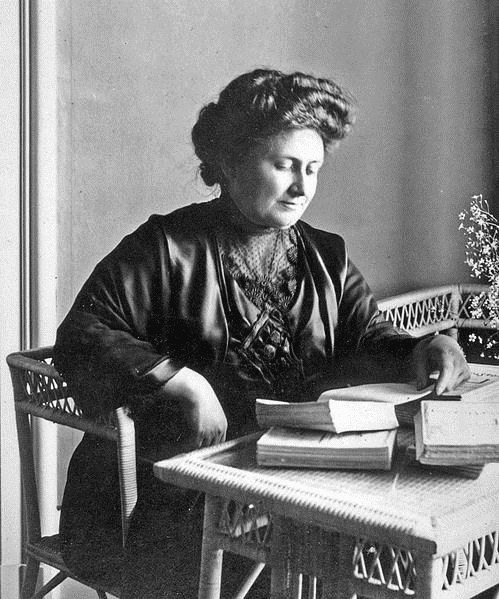
Maria Tecla Artemisia Montessori was an Italian physician and educator. She was born on August 31st, 1870, in Chiaravalle, Italy. Her parents were both well-educated, and her mother supported Maria’s ongoing education, fostering a close relationship between them. She and her father shared a loving relationship, but he did not encourage her education; to the contrary, he disagreed with it. When she was six, Maria attended the public elementary school, and her early reports were not particularly noteworthy, although she earned certificates for good behavior and “women’s work.” When she was thirteen, she entered a technical school where she studied Italian, math, algebra, geometry, geography, history, and science. In 1886, she graduated with honors. At sixteen she continued her technical education, studying Italian, maths, history, geography, botany, zoology, and two modern languages. Her intent was to begin the study and eventually a career in engineering, which was very unusual for a woman at that time. Her plans changed in 1890 when she graduated and chose to study medicine, which was an even more alarming choice for a woman given the cultural norms of the time.
That same year Maria moved to Rome and enrolled at the University of Rome. She encountered discouragement at every turn. However, after intensive study and great dedication, three years later, in 1893, she qualified for entrance into the medical program there. It was not an easy path she had chosen, and she met with unbridled hostility and harassment from some students and professors. Her father also became vocal once again about her choice of career. She persisted and won an academic prize in her first year, and by 1895 secured a position as a hospital assistant where she gained much experience. In her last two years, she studied pediatrics and psychiatry, becoming an expert in pediatric medicine. Maria found work art the university hospital and also opened her private practice.
After years of working with and studying children, based on scientific observation of those children, Maria formed a philosophy for educating children. She believed in a child-centered, self-directed form of education with hands-on learning and independent growth, and firmly believed that children naturally want to learn and will when given freedom and the right environment. She opened the first Casa dei Bambini (Children’s House) in 1907 in the poorest district in Rome. Her enormous success sparked great interest. In 1912, she published her foundational work, The Montessori Method.
Because of her outstanding success, her method gained great interest not only locally but globally. In 1912, Alexander Graham Bell championed her approach at his exhibit at the Panama-Pacific International Exhibition in San Francisco, which drew worldwide crowds. While there has been some controversy around her methods. Mainstream educators heavily criticized Montessori for lacking traditional adult-led discipline and rigid academic testing. However, her educational model has drawn much positive review and continues today all over the globe.
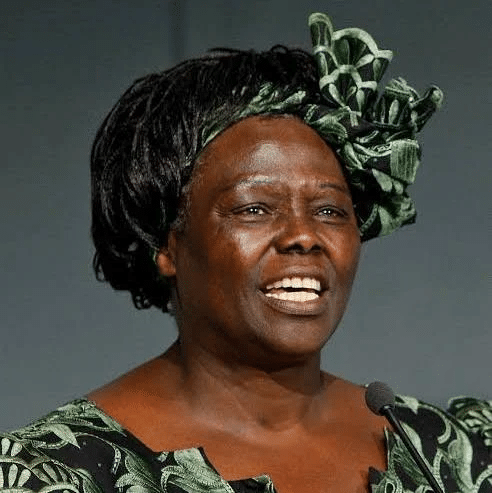
Wangari Maathai was a Kenyan political, social, and environmental activist. She founded the Green Belt Movement, an environmental non-governmental organization that focused on environmental conservation, planting trees, and women’s rights. She was born on April 1, 1940, in the village of Ihithe in the central highlands of Kenya. At the age of eight she attended the local primary school, and when she was eleven Wangari enrolled at St. Cecilia’s Primary School, a boarding school. During the four years she attended St. Cecilia’s, she became fluent in English. Her goal in life was “to serve God by serving fellow human beings.” Wangari finished her studies at St. Cecilia’s, ranked first in her class, and Loreto High School in Limuru accepted her. Through the Joseph P. Kennedy, Jr. Foundation, Wangari was one of 300 Kenyans selected to study in the United States.
Wangari received a scholarship to study at Mount St. Scholastica College (now Benedictine College) in Atchison, Kansas. She majored in Biology with minors in chemistry and German. In 1964 she earned a B.S. and went on to the University of Pittsburgh to earn an M.A. in Biology. Back in Africa, she began work as a research assistant at the University College of Nairobi.
In 1966, Wangari established a general store in the neighborhood of Eastleigh, in Nairobi, and she employed her sisters. The following year she traveled to Giessen, Germany, to pursue a Ph.D. In the spring of 1969, she returned to Nairobi to continue her studies and was an assistant lecturer at the University College of Nairobi. She also married Mwangi Mathai, a fellow student who studied with her in the States. She had her first child, a son, Waweru. In 1971 Wangari became the first Eastern African woman to earn her Ph.D. Her daughter, Wanjira, was born in December of that year. In 1974 her third son, Muta, was born.
In 1975 Wangari was a senior lecturer at the University of Nairobi, and in 1976 chair of the Department of Veterinary Anatomy, and in 1977 was an associate professor. The first woman in Nairobi to hold any of these positions. She worked with various women’s organizations and other non-governmental agencies benefiting both women and the environment. Moving to Kenya, she became aware that amid the unrest in her country, the biggest problem, probably the root of Kenya’s problems, was what was happening to the environment. She spoke at various conferences and addressed community leaders about this issue. The community planted several trees on World Environmental Day to honour historical leaders. Planting trees as a method to address some of the critical environmental issues gained traction. The Green Belt Movement was born. Wangari continued to speak, and she urged the women of Kenya to plant trees and nurseries throughout the country and to scour nearby forests for seeds to save and grow more native trees. Through grants she could pay them a small amount for their labor.
Following a lengthy separation, Wangari and her husband Mwangi divorced in 1979. He said that his former wife was “too strong-minded for a woman and he was unable to control her.” He was now a Member of Parliament and a big man around town. The court ruled in Mwangi’s favor. In an interview shortly after the trial, Wangari referred to the judge as either incompetent or corrupt. The judge responded to those words by charging her with contempt of court, and the court handed down a six-month jail sentence. Her lawyer arranged her release after only a few days. Mwangi then ordered her to drop his surname. Rather than change her last name, she simply added an extra “a” to the name.
Wangari wrote Replenishing the Earth: Spiritual Values for Healing Ourselves and the World in 2010. It was a treatise on “the importance of communities taking responsibility for their actions and mobilizing to address their local needs.” We all need to work hard to make a difference in our neighborhoods, regions, and countries, and in the world as a whole. That means making sure we work hard, collaborate, and make ourselves better agents to change.”
Her career was long and colorful. Her life was always lived fully and by her own strong values – always advocating for democracy, women’s rights, and the environment. In 2002, Wangari campaigned for parliament as a candidate of the National Rainbow Coalition. She won with an overwhelming 98% of the vote. The following year she was appointed assistant minister of the Ministry for the Environment and Natural Resources. The Green Belt Movement literally transformed Africa. They planted over fifty million trees, empowered rural women, and sparked broader democratic and conservation reforms across the continent. They restored degraded landscapes, established critical watersheds, and created or preserved indigenous forests across Kenya and other nations. The Green Belt Movement evolved into a political voice that challenged government corruption, land grabbing, and illegal deforestation.
Her awards and recognitions were many, spanning decades. In 2004, she became the first African woman to win the Nobel Peace Prize for linking the environment, human rights, and peace.
Outstanding women, all three. Maria and Wangari’s legacies live on. They were “present” and they were dedicated. They lived by their own lights and succeeded in making the world a better place.
Maureen in making a difference with her heart and her words.
I’m going to strive to be more present, more mindful, and more peaceful this week…to be the best human I can be! This week is going to be a good week.