
Nine Simple Words
“We live in a polyphonic world, but also one in which the majority of Earth’s inhabitants – human and other than human- are denied voice. To be silenced is not the same as to be silent; to go unheard is not the same as to be speechless.”
Those are the words of Robert MacFarlane in his book, “Is A River Alive?” It is a beautiful book, and the answer is yes. However, I use that quote in a different context today. Often, women’s voices are denied by their families of origin, religion, early education, workplace, and society. This can cripple us, or we can rise above it, heal and find our voice, and use it for good.
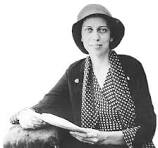
Eudora Welty was one of those women. I am sure you have heard her name. She wrote books that maybe you’ve read. But she made history in 1963 in Jackson, Mississippi. Six days after Martin Luther King, Jr., was arrested in Birmingham, Alabama, Eudora acted in a way that could have cost her life. The South was a powder keg. In Jackson, Blacks had boycotted businesses. The KKK was operating loud and clear out in the open. The White Citizens’ Council terrorized anyone who challenged segregation.
Eudora Welty, the soft-spoken and polite Southern lady, received an invitation to read at the Southern Literary Festival at Millsaps College. She was the kind of white woman that Southerners held up as proof of their refined culture. Eudora was Mississippi’s most celebrated writer of the time.
Before accepting the invitation, she made one demand. “The audience must be integrated, or I won’t come.” She wasn’t marching in the street, shouting, carrying a bullhorn and making demands. This quiet, refined Southern lady simply uttered nine words. Millsaps College never had an integrated audience for anything. Eudora did not back down.
She was born in Jackson, and people had warned her many times to stay in her own lane and to pipe down. She knew exactly what society expected; write about polite things, gardens, teas, but never upset white comfort. Eudora knew what she was doing and held fast. If Black people couldn’t sit in that auditorium, she refused to stand at that podium and read.
On April 18, 1963, Millsaps College experienced its first integrated audience, because one Southern lady would not yield to segregation.
Beginnings: Eudora Welty was born on April 13, 1909, in Jackson, Mississippi. Her mother, Mary, was a schoolteacher. Her father, Christian, was an insurance executive but also helped develop the first skyscraper in Jackson, in 1924 and he founded a radio station, WJDX. Eudora had three brothers.
Eudora’s mother reinforced her love of reading and language, saying, “any room in our house, at any time in the day, was there to read in, or be read to.” She published her first poem in St. Nicholas magazine at age 11, showing early promise. Machines, gadgets, and photography very intrigued her father and fostered a love of technology.. Eudora became an avid photographer.
“In our house on North Congress Street in Jackson, Mississippi, where I was born, the oldest of three children, in 1909, we grew up to the striking of clocks. There was a mission-style oak grandfather clock standing in the hall, which sent its gong-like strokes through the living room, dining room, kitchen and pantry, and up the sounding board of the stairwell. Through the night, it could find its way into our ears; sometimes, even on the sleeping porch, midnight could wake us up. My parents had a smaller striking clock that answered it. . . . This was good at least for a future fiction writer, being able to learn so penetratingly, and almost first of all, about chronology. It was one of a good many things I learned almost without knowing it; it would be there when I needed it.”
She graduated from Central High School in Jackson with honors. Eudora attended Mississippi State College for Women and the University of Wisconsin, graduating with a B.A. in English. Her father suggested she should study advertising at Columbia University, which she did for a little while. But it was during the Great Depression and she struggled to find work in New York.
Returning to Jackson in 1931, after her father’s death from leukemia, and working at her father’s radio station and for the WPA as a publicity agent, exposed her to rural Mississippi life, fueling her passion for writing. During this time, Eudora held meetings with fellow writers and creative friends at her home, forming the whimsical literary group they called the Night-Blowing Cereus Club. The name of the club refers to the cereus flower, which embodies the Southern tradition of “Bloom Parties” to witness the blooming of the fragrant nocturnal blooms. These gatherings symbolized the shared wonder of the blooms, community, and inspiration for making art. Their famous motto is: “Don’t take it cereus, life’s too mysterious.” Three years later, Eudora left her job and became a full-time writer.
Eudora Welty had a prolific career. In 1936 she published “The Death of a Traveling Salesman” in the literary magazine, Manuscript. Soon, other stories followed in prestigious publications. Her success earned her a seat on the staff of the New York Times Book Review and a Guggenheim Fellowship. This honor enabled her to travel to Ireland, France, England and Germany. While abroad, she was a resident lecturer at the University of Oxford and Cambridge. She was the first woman allowed to enter the hall of Peterhouse College.
In 1960, Eudora returned to Jackson again, this time to care for her elderly mother and two of her brothers. When Medgar Evers was assassinated, she wrote “Where Is the Voice Coming From ?”, in one night. It is a first-person perspective from inside the mind of the murderer himself. Eudora crawled into the psychology of white supremacist violence and showed it from the inside. It is chilling. The New Yorker published it immediately. She was terrified and waited for the backlash to hit.
That Eudora dared to address race at all outraged some readers. Others accused her of being too sympathetic to the murderer in giving him a voice. Some Southern readers felt she had betrayed them. Her invitations were now nonexistent, and many people stopped reading her work. She was not “banned” just no longer welcome.
But this is what makes Eudora Welty a heroine with remarkable courage. She KNEW EXACTLY what would happen. She had witnessed it happening to other writers who dared address race. It wasn’t done – but she did it. She knew it could damage her career, cause threats, and her home could be targeted. The attackers frequently firebombed the homes of those who spoke out. No speeches. No protests. Just the quiet, devastating precision of her art. Her voice was heard.
Eudora wasn’t penning propaganda; this was truth and more dangerous than propaganda. It was about ordinary people, neighbors, husbands, wives, the person down the street, all of whom would kill over the perceived threat of equality. You do not have to be loud to be dangerous to injustice. You just have to refuse a lie. The work did just that, bringing literary focus to the tragedy, and was praised in other places for its exploration of a dark moment in history.
In 1971, Eudora published a collection of photographs that depicted the Great Depression. Two years later, she received the Pulitzer Prize for Fiction for the novel, The Optimist’s Daughter. She was also a frequent lecturer at Harvard. She never became loud, but she was steadfast. Sometimes when we speak of courage, we think of people who shout or make grand gestures. Sometimes a quiet “no” when everyone else expects a “yes” is the most effective.
“There is no wonder that a passion for independence sprang up in me at the earliest age. It took me a long time to manage the independence, for I loved those who protected me—and I wanted inevitably to protect them back. I have never managed to handle the guilt. In the act and the course of writing stories, these are two of the springs, one bright, one dark, that feed the stream.”—Eudora Welty, 1984, One Writer’s Beginnings.
Eudora Welty was the recipient of too many honors to list over decades. Her legacy remains in her writing.
On her headstone is a quote from The Optimist’s Daughter: “For her life, any life, she had to believe, was nothing but the continuity of its love.”