
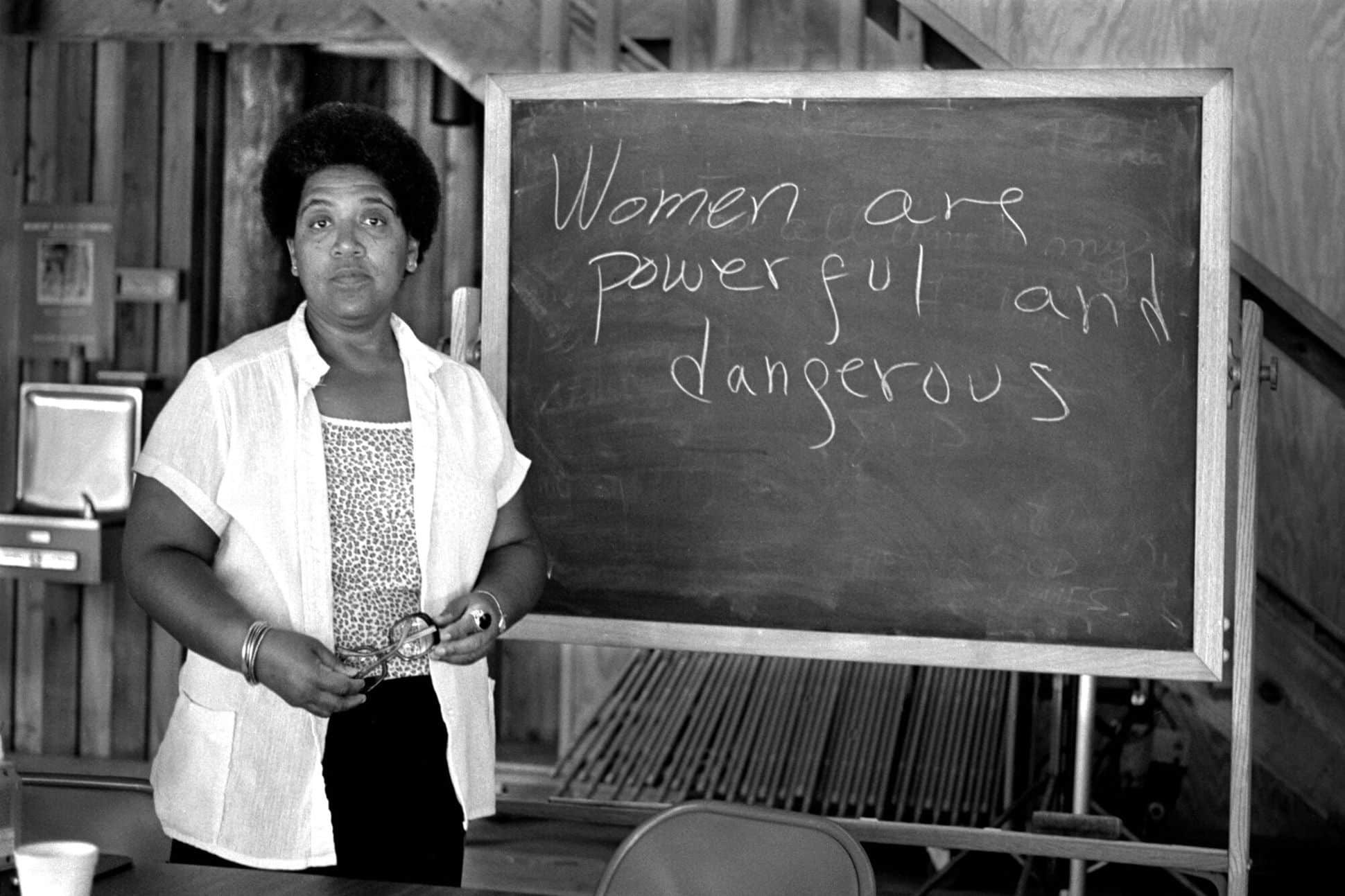
A friend recently said to me, “I hate the word resilient.” She contends that this narrative serves as a calculated exoneration, effectively granting perpetrators a reprieve while dismissing the systemic harm done to women. But women are “resilient”; they bounce right back. Look at how strong they are. She said she was tired, tired of bouncing back. As women, we spend much of our lives surviving and bouncing back! It is a profound and uncomfortable truth. Resilience is not a “boys will be boys” thing though. I understand what she was saying, and I am tired too. However, when we rest and bounce back, we regain health. We may or may not forgive, and we do not forget.
“People love saying ‘girls mature faster’ like it’s a compliment.
But what they really mean is girls are taught earlier how to stay quiet, stay polite, stay safe, and stay small. They’re told to watch what they wear before they even understand why. They’re blamed for attention they didn’t ask for.They learn to read danger before they learn algebra. They carry responsibility long before they’re given freedom. That isn’t maturity. That’s survival training. Real maturity would look like girls being allowed to grow at their own pace instead of being pushed into emotional labor, silence, and protection mode while they’re still children. If girls seem “stronger,” it’s often because they had to be. And that should concern us not impress us.” (A Woman’s Soul)
We are resilient and but have reason to be concerned.
Aude Lore is a powerful example of resilience. She emphasizes survival both a an act of radical self-care and profound power. She encourages turning challenges into fuel for growth and standing, always unapologetically, in one’s truth.
“We are powerful because we have survived, and that is what it is all about – survival and growth.” Aude Lorde
Audrey Geraldine Lorde was born on February 18, 1934, in New York City. Her mother, Linda, was from Granada and was a light-skinned Black woman, but sometimes passed as Spanish for employment opportunities. Her father, Byron, born in Barbados, was dark-skinned, and Linda’s family did not approve of his skin color. They only allowed the couple to marry because of his charm, ambition, and persistence. The couple immigrated to the U.S. and settled in Harlem.
Being the youngest of three daughters, Audrey was very close to her older sisters, Phyllis and Helen. Audrey was legally blind from a very young age. Her mother and other adults severely disciplined Audrey throughout her young life for her “insolence.” Her limited sight isolated her from her surroundings and her family from whom she received very little warmth or affection, in addition to experiencing racism at a tender young age and was spit upon more than once and their landlord hung himself because he had to rent to Blacks.
Audrey didn’t speak at all until she was four, at which time she announced she wanted to read! Augusta Braxton Baker at the 135th Street Branch of the New York Public Library lovingly guided her as she followed through on this desire. Augusta is best known as the pioneering librarian and master storyteller; a trailblazer for diversity in children’s literature. Audrey also learned to write around this same time. While she was still a child, Audrey dropped the “y” from her first name because she preferred the visual and artistic symmetry of both side-by-side names ending in an “e.”
Aude’s relationship with her parents was very challenging and difficult. She experienced emotional distance and often coldness during the time she spent with them. Both parents were very engaged in a property management business. This was a time just after the Great Depression, and the economy was unstable. Her relationship with her mother was very strained, oddly enough, because of her skin color. Audre was darker-skinned than her mother, and this was an issue. This divide figured prominently in her writing later in her life.
Audre grew up Catholic and attended a Catholic grammar school. She attended Hunter College High School, a secondary school for intellectually gifted students. During her high school years, she formed a bond with a few non-Black girls. They label themselves “The Branded.” Audre became the literary editor of the school’s arts magazine. She began her lifelong journey of writing poetry.
After graduation Audre left home and shared an apartment with friends, cutting all contact with her family. She had a tough time communicating and memorized a great deal of poetry. She recognized poetry as a powerful form of expression when other words failed her. “I used to speak in poetry. I would read poems, and I would memorize them. People would say, well what do you think, Audre? ” What happened to you yesterday? And I would recite a poem, and somewhere in that poem would be a line or a feeling I would be sharing. In other words, I literally communicated through poetry. And when I couldn’t find the poems to express the things I was feeling, that’s what started me writing poetry, and that was when I was twelve or thirteen.” She dated a white boy, Peter, who jilted her on New Year’s Eve after finding out she was pregnant. Audre decided to end the pregnancy. After some soul-trying times at Hunter College, she graduated with a B.A. in literature.
When her father died, Audre moved back to New York, where she attended Columbia University, earning an M.A. in Library Science. During this time she began a relationship with Bea but broke her heart when Audre decided to more to Mexico. In Mexico, she spent a year studying at the National Autonomous University of Mexico in Cuernavaca, while working as a secretary at a local hospital. She lived among expatriates and immersed herself in an environment where she could live openly as a lesbian. It ended years of isolation and feeling like a misfit. It gave her validation, support, and confidence to pursue her work as a writer.
Back in New York, Ardre worked as a librarian at the Mount Vernon Public Library and as head librarian at the Town School Library in New York City before transitioning into a career in academia and full-time writing. In 1968, she was writer-in-residence at Tougaloo College in University where she led workshops with young, eager, Black undergraduate students who were fired up by civil rights issues. These encounters reaffirmed her knowledge that she wanted to live as a “crazy and queer” writer but continue to hone her craft as a poet.
She had two children with her husband, Edwin Rollins, a white, gay man, before they divorced in 1970. In 1972, Lorde met her long-time partner, Frances Clayton. Audre became an associate of the nonprofit Women’s Institute for Freedom of the Press (WIFP) in 1977. Their goal was to increase communication between women and connect the public with all forms of women-based media. In 1981, she returned to Hunter College to hold the prestigious Thomas Hunger Distinguished Chair.
Audre says she draws her power and strength from the women in her life. Her early collections of poetry include The First Cities (1968), Cables to Rage (1970), and From a Land Where Other People Live (1972), which was nominated for a National Book Award. Later works, including New York Head Shop and Museum (1974), Coal (1976), and The Black Unicorn (1978), included powerful poems of protest. “I have a duty,” Lorde once stated, “to speak the truth as I see it and to share not just my triumphs, not just the things that felt good, but the pain, the intense, often unmitigating pain.” Lorde’s later poems were often assembled from personal journals. Explaining the genesis of “Power,” a poem about the police shooting of a ten-year-old black child, Lorde discussed her feelings when she learned that the officer involved had been acquitted: “A kind of fury rose up in me; the sky turned red. I felt so sick. I felt as if I would drive this car into a wall, into the next person I saw. So I pulled over. I took out my journal just to air some of my fury, to get it out of my fingertips. Those expressed feelings are that poem.” (Poetry Foundation)
As Allison Kimmich noted in Feminist Writers, “Throughout all of Audre Lorde’s writing, both nonfiction and fiction, a single theme surfaces repeatedly. The black lesbian feminist poet activist reminds her readers that they ignore differences among people at their peril … Instead, Lorde suggests, differences in race or class must serve as a ‘reason for celebration and growth.’”
Audre Lorde’s honors and awards included a fellowship from the National Endowment for the Arts. A professor of English at John Jay College and Hunter College, Lorde was poet laureate of New York from 1991 to 1992. Warrior Poet (2006), by Alexis De Veaux, is the first full-length biography of Audre Lorde.